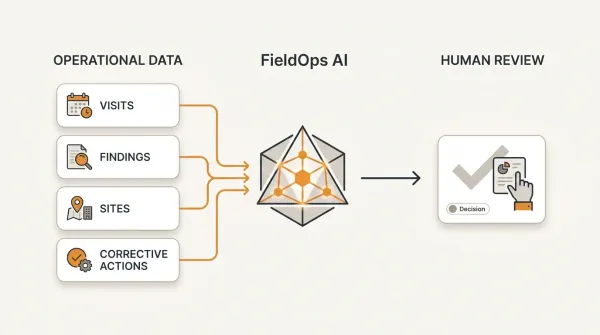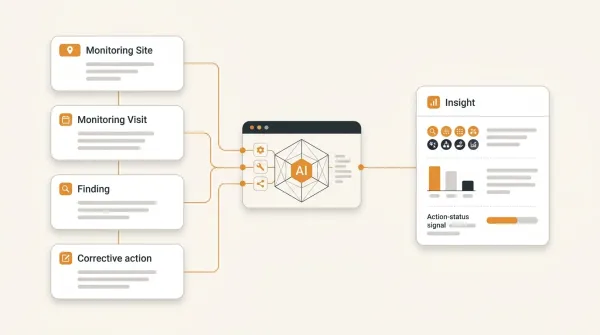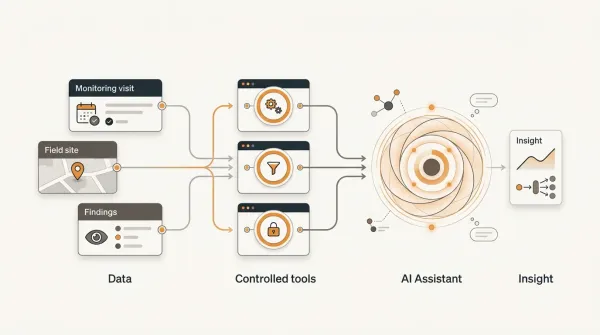
Audit Trails in Development Programmes: Why Accountability Matters More Than Ever
Learn why audit trails are essential for NGOs, governments and development programmes, and how operational history strengthens accountability, compliance and continuous improvement.

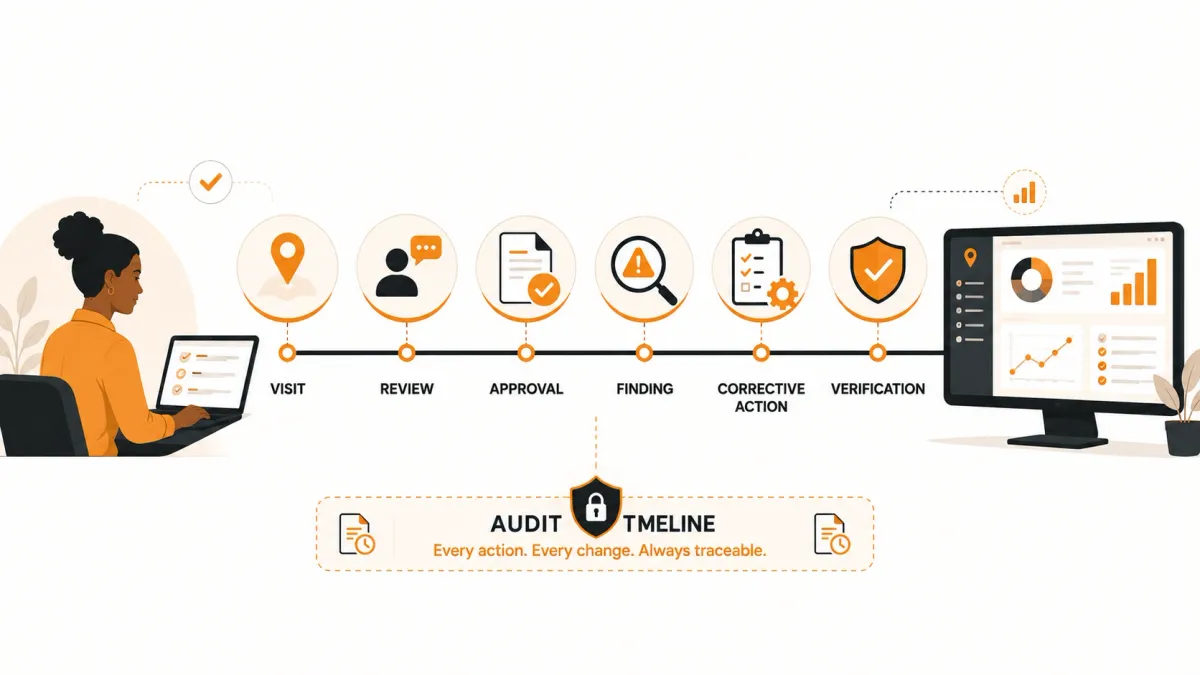
An audit trail is more than a technical log. It is the operational memory of an organisation. Every important decision, approval, change and corrective action should leave a transparent record that explains who did what, when they did it and why it happened.
Audit Trails in Development Programmes: Why Accountability Matters More Than Ever
Key Takeaways
- Audit trails are essential for operational accountability.
- Good audit trails support governance, learning and donor confidence.
- Version history is more valuable than simple activity logs.
- Operational audit trails should cover visits, reviews, approvals, findings and corrective actions.
- Modern Operational Intelligence platforms treat audit history as a core capability.
What Is an Audit Trail?
Development programmes need more than security logs. They need operational history that answers:
- Who performed an action?
- What changed?
- When did it change?
- What was the previous value?
- What is the new value?
- Why was the change made?
- Who reviewed or approved it?
An audit trail explains the complete story behind an operational decision.
Why Audit Trails Matter
Audit trails help organisations:
- Demonstrate accountability to donors.
- Investigate operational issues.
- Resolve disputes.
- Preserve institutional knowledge.
- Improve monitoring quality.
- Build confidence in reports and dashboards.
Transparency is created by trustworthy operational history.
What Should Be Audited?
| Operational Area | Record |
|---|---|
| Field Visits | Creation, edits, submissions, approvals |
| Reviews | Comments, decisions, timestamps |
| Findings | Creation, severity, status history |
| Corrective Actions | Assignment, updates, verification, closure |
| Templates | Version history |
| Imports | Validation and corrections |
| User Permissions | Role changes |
| KPI Definitions | Reporting logic changes |
Real-World Scenarios
Education
Audit history shows who approved incomplete evidence and why.
Health
Verification history explains why a corrective action marked complete later reappeared.
Government
Inspectors reconstruct the complete inspection timeline from original submission through approvals.
Multi-partner Programmes
Version history identifies where reporting discrepancies originated.
Common Audit Trail Mistakes
| Mistake | Better Practice |
|---|---|
| Login logs only | Record operational decisions |
| Overwriting records | Preserve versions |
| Deleting history | Maintain permanent records |
| Final status only | Record every transition |
| No attribution | Record who and why |
How Modern Operational Intelligence Platforms Solve This
Principle 1: Everything Important Is Versioned
Historical states should always be recoverable.
How FieldOps Implements This
FieldOps preserves previous versions instead of overwriting operational records.
Principle 2: History Is Immutable
Operational history should become permanent evidence.
How FieldOps Implements This
FieldOps records submissions, reviews, approvals, findings, corrective actions and status transitions in operational timelines.
Principle 3: Every Decision Has Attribution
Knowing who acted is essential for accountability.
How FieldOps Implements This
FieldOps records user attribution throughout the operational lifecycle.
Principle 4: Audit Trails Support Learning
Historical trends reveal recurring operational problems.
How FieldOps Implements This
FieldOps combines audit history with dashboards to surface recurring issues and long-term trends.
Audit Trail Evaluation Checklist
Can your platform answer:
- Who changed this?
- When?
- Why?
- Who approved it?
- What changed?
- Can previous versions be restored?
- Can a visit be reconstructed months later?
Our Recommendation
Choose a platform that provides:
- Version history
- Immutable timelines
- User attribution
- Review history
- Approval history
- Corrective action tracking
- Integrated dashboards
- Organisation-wide reporting
Final Thoughts
The strongest development programmes are those that can explain every important operational decision from planning through implementation, review, corrective action and continuous learning.
Trust is built through operational accountability.
Move beyond data collection
FieldOps helps NGOs manage field visits, monitoring templates, findings, corrective actions, dashboards and donor reporting in one operational intelligence platform.
Learn more about FieldOps