The Best Monitoring & Evaluation Software for NGOs and Development Programmes (2026)
Choosing monitoring and evaluation software isn't about finding the platform with the most features. Learn which tools are best for data collection, health systems, research and operational intelligence, and how to choose the right platform for your organisation.

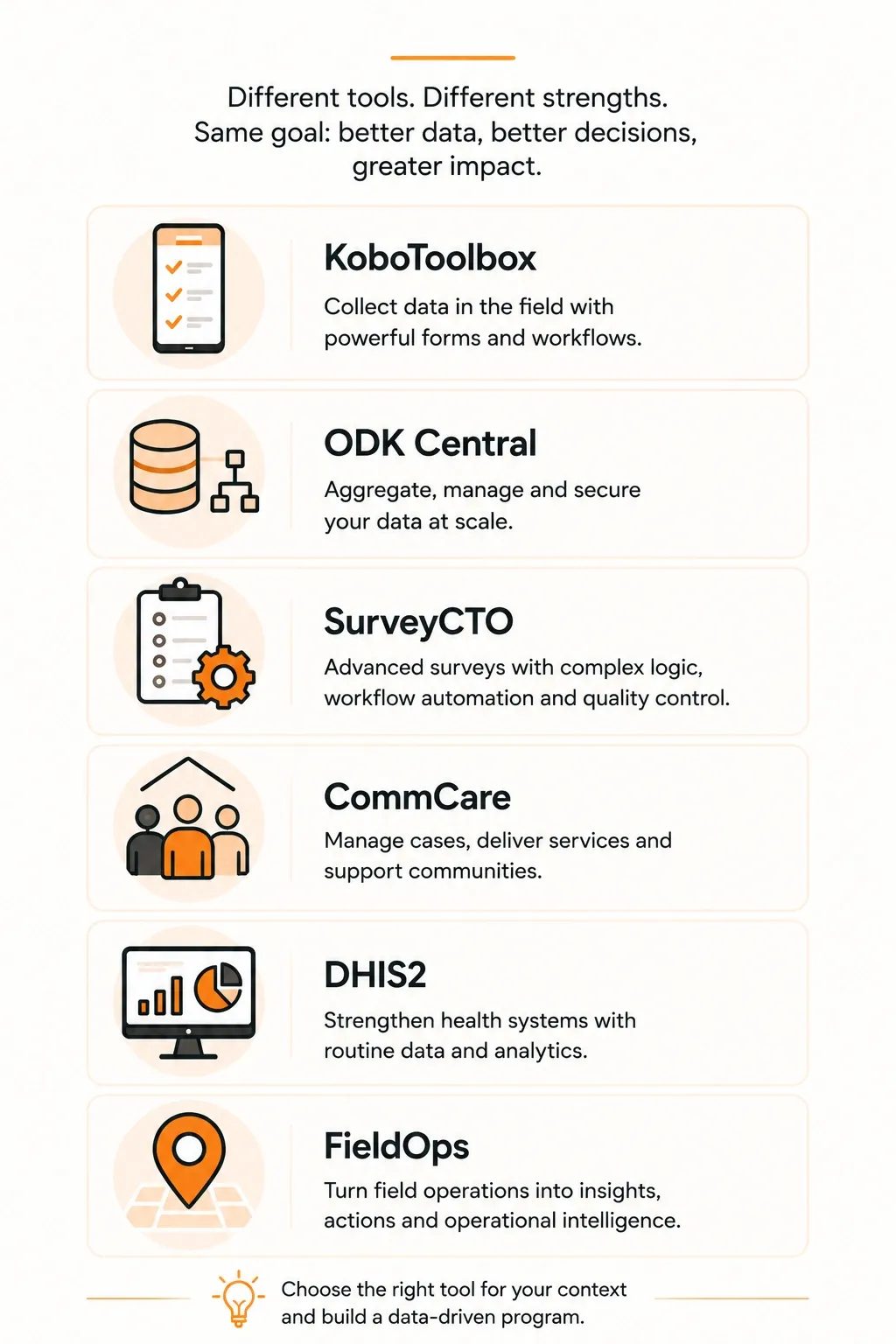
Choosing monitoring and evaluation software isn't about finding the platform with the longest feature list. It's about selecting the tool that best fits how your organisation plans, manages and improves field operations.
Key Takeaways
- There is no single "best" monitoring and evaluation platform for every organisation.
- Different tools solve different operational problems.
- Data collection is only one part of effective monitoring.
- As programmes grow, operational workflows become just as important as surveys.
- The right software depends on your organisation's maturity, reporting needs and operational complexity.
Search for "best monitoring and evaluation software" and you'll find dozens of comparison articles.
Unfortunately, many of them have one thing in common.
They're written by companies that have already decided which product should win.
The reality is that the development sector uses a wide range of tools successfully.
Some organisations only need mobile data collection.
Others need national health reporting.
Others need research-grade survey capabilities.
And an increasing number need to manage the complete operational lifecycle—from planning field visits to tracking findings, corrective actions and donor reporting.
The best monitoring software is the one that solves your biggest operational constraint—not the one with the most features.
Start With the Problem, Not the Product
Before comparing software, define what you're actually trying to improve.
Ask:
- Are we replacing paper forms?
- Do we need reliable offline data collection?
- Are we struggling to manage thousands of field visits?
- Are findings and corrective actions tracked manually?
- Do we need executive dashboards across multiple programmes?
- Are donor reporting requirements becoming more complex?
The Six Categories of Monitoring Software
| Category | Primary Purpose |
|---|---|
| Mobile data collection | Capture structured information in the field |
| Survey platforms | Research and assessments |
| Health information systems | National health reporting |
| Operational management | Manage field operations and workflows |
| Business Intelligence | Analyse and visualise data |
| Project management | Coordinate teams and tasks |
Comparing the Leading Monitoring Platforms
The tools below are all well-established, but they were designed to solve different problems.
Comparing them as though they serve the same purpose often leads organisations to select software that fits one part of their workflow while leaving major operational gaps elsewhere.
KoboToolbox
Best for:
- Offline mobile data collection
- Household surveys
- Needs assessments
- Humanitarian response
- Small to medium monitoring programmes
KoboToolbox is one of the strongest open-source platforms available for collecting structured field data. If your primary objective is designing forms, deploying them quickly and collecting reliable responses, it remains an excellent choice.
The limitation is not data collection.
The limitation is that organisations often expect it to become a complete operational management system.
ODK Central
Best for:
- Technical deployments
- Large-scale data collection
- Organisations with in-house technical capacity
ODK Central offers exceptional flexibility and scalability, particularly for organisations with experienced technical teams.
Like KoboToolbox, its strength lies in collecting high-quality data rather than managing the complete operational lifecycle.
SurveyCTO
Best for:
- Research projects
- Academic studies
- Large surveys requiring advanced validation
SurveyCTO is widely respected for research-quality data collection and sophisticated survey logic.
For organisations conducting rigorous research, it can be an excellent investment.
CommCare
Best for:
- Community health programmes
- Case management
- Frontline worker workflows
CommCare extends beyond traditional surveys by supporting longitudinal case management.
It is particularly well suited to programmes where beneficiaries are followed over time.
DHIS2
Best for:
- National health information systems
- Ministry of Health reporting
- Aggregate health indicators
DHIS2 occupies a different category from the other platforms in this comparison.
It is designed for health information management at national and regional scale rather than general field monitoring across sectors.
FieldOps
Best for:
- Development programmes
- Government field operations
- NGO operational management
- Multi-programme monitoring
- Findings management
- Corrective action tracking
- Operational dashboards
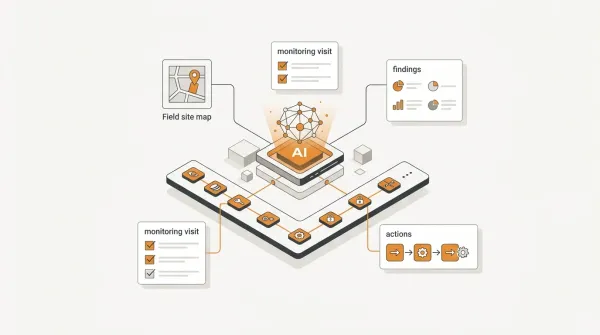
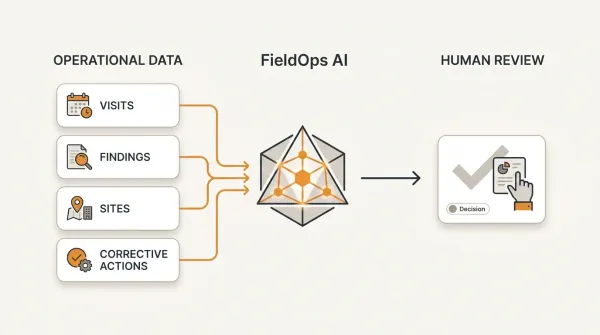
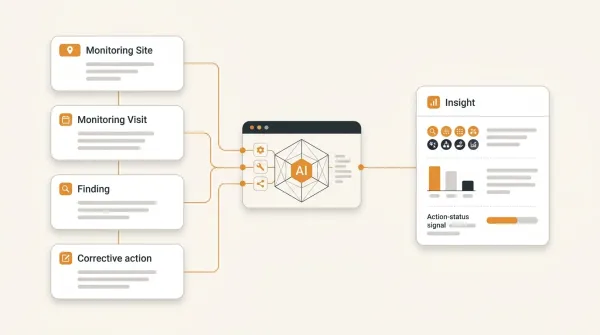
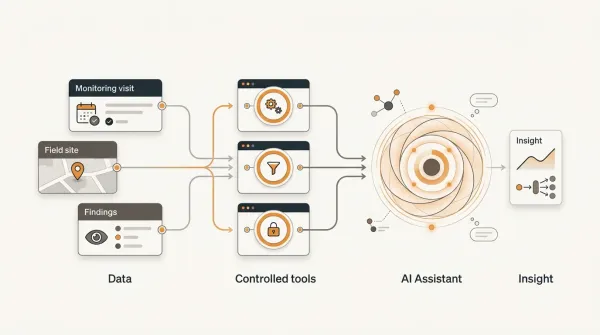
FieldOps approaches the problem from a different direction.
Rather than replacing specialised data collection platforms, it focuses on managing everything that happens before and after field data is collected.
That includes:
- planning field visits
- assigning teams
- review and approval workflows
- findings management
- corrective actions
- audit trails
- operational dashboards
- BI integrations
- donor reporting
For organisations already using KoboToolbox, ODK Central or Excel, this means data collection can remain familiar while operational management becomes significantly more structured.
Comparison at a Glance
| Requirement | Kobo | ODK | SurveyCTO | CommCare | DHIS2 | FieldOps |
|---|---|---|---|---|---|---|
| Offline data collection | ✓ | ✓ | ✓ | ✓ | Limited | Integrates |
| Survey design | ✓ | ✓ | ✓ | ✓ | Limited | Integrates |
| Field visit planning | Limited | Limited | Limited | Partial | No | ✓ |
| Review workflows | No | No | Limited | Partial | No | ✓ |
| Findings management | No | No | No | Limited | No | ✓ |
| Corrective actions | No | No | No | Limited | No | ✓ |
| Operational dashboards | Partial | Partial | Partial | Partial | ✓ | ✓ |
| Multi-programme operational oversight | Limited | Limited | Limited | Partial | Partial | ✓ |
The important takeaway is not that one platform is universally better than another.
It is that different platforms solve different operational problems.
The right choice depends on the stage of maturity your organisation has reached.
How to Choose the Right Platform
The best software depends less on your sector and more on your operational maturity.
If you're replacing paper forms
Start with a strong data collection platform.
KoboToolbox, ODK Central and SurveyCTO are all excellent choices depending on your technical capacity and budget.
If you're coordinating multiple programmes
Look beyond form design.
Ask whether you need:
- visit planning
- reviewer approvals
- findings management
- corrective action tracking
- organisation-wide dashboards
- audit trails
These requirements point toward operational management rather than data collection alone.
If you're reporting to multiple donors
Consistency becomes critical.
A platform that standardises templates, workflows and reporting across programmes will usually deliver more long-term value than one that simply captures data efficiently.
Common Mistakes When Selecting Monitoring Software
| Mistake | Better Approach |
|---|---|
| Buying based on feature count | Buy based on operational problems you need to solve |
| Replacing existing tools unnecessarily | Build on tools that already work well |
| Ignoring review and follow-up workflows | Evaluate the complete operational lifecycle |
| Thinking only about data collection | Consider planning, approvals, findings and reporting |
| Letting every programme use different processes | Standardise where practical |
Software should simplify operations. If introducing a new platform creates more disconnected workflows, you've solved one problem while creating another.
A Practical Decision Framework
Choose the option that best describes your organisation.
| Your Situation | A Good Starting Point |
|---|---|
| Research and surveys | SurveyCTO |
| Offline humanitarian assessments | KoboToolbox |
| Technically managed large-scale mobile collection | ODK Central |
| National health reporting | DHIS2 |
| Community case management | CommCare |
| Multi-programme operational management with findings, corrective actions and executive reporting | FieldOps |
Notice that these recommendations are complementary rather than competitive.
Many organisations successfully combine more than one platform.
For example, a development programme might continue collecting field data with KoboToolbox while using FieldOps to manage field visits, review workflows, findings, corrective actions and operational dashboards.
Real-World Scenarios
The following examples illustrate how different organisations often arrive at different technology decisions.
Scenario 1: A Small NGO Running Community Surveys
A local NGO manages a nutrition project across ten communities.
Its biggest challenge is replacing paper forms with reliable offline data collection.
There are no complex approval workflows and only a small monitoring team.
A good fit: KoboToolbox.
At this stage, introducing a larger operational platform may add unnecessary complexity.
Scenario 2: A National Development Programme
A government-funded agriculture programme operates across multiple counties.
Hundreds of field visits are completed every month.
Regional supervisors review submissions.
Findings are raised.
Corrective actions are assigned to county teams.
Executive leadership needs dashboards showing operational performance across every programme.
Data collection is only one part of the workflow.
A good fit: Continue using existing data collection tools where appropriate, but introduce an operational platform such as FieldOps to manage planning, review workflows, findings, corrective actions and reporting.
Scenario 3: A Humanitarian Emergency Response
An emergency response team needs to deploy assessments within hours.
Speed, offline capability and rapid form deployment are the highest priorities.
Operational workflows are important, but immediate data collection comes first.
A good fit: KoboToolbox or ODK Central for rapid deployment, with additional operational processes introduced as the response stabilises.
Scenario 4: A Ministry or Large Public Agency
A ministry oversees multiple programmes delivered by different departments and implementing partners.
Leadership needs organisation-wide visibility, standard operating procedures, audit trails and accountability across thousands of field activities.
Collecting data is no longer the primary challenge.
Coordinating operations is.
A good fit: A platform designed for operational management, supported by existing specialist systems where appropriate.
Decision Tree
Use the questions below to identify the type of platform that best matches your current needs.
Are you mainly replacing paper forms?
        │
       Yes
        │
Need reliable offline data collection?
        │
       Yes ─────────────► KoboToolbox / ODK Central / SurveyCTO
        │
       No
        ▼
Do you already collect data successfully?
        │
       Yes
        │
Need approvals, findings, corrective actions,
executive dashboards or multi-programme oversight?
        │
       Yes ─────────────► Operational Intelligence platform (such as FieldOps)
        │
       No
        ▼
Continue improving your existing workflow before introducing additional software.
The important point is that this isn't always an either-or decision.
Many organisations continue using established data collection tools while adding an operational management platform as their programmes mature.
The right technology stack should evolve alongside your operational needs rather than forcing you to replace systems that are already working well.
Final Thoughts
The question isn't which monitoring platform has the longest feature list.
The better question is:
Which platform removes the biggest operational bottleneck in your organisation today?
For some organisations, that bottleneck is paper-based data collection.
For others, it's fragmented operational workflows after the data has already been collected.
Understanding that distinction leads to better technology decisions, better programme management and, ultimately, better outcomes for the communities you serve.
Move beyond data collection
FieldOps helps NGOs manage field visits, monitoring templates, findings, corrective actions, dashboards and donor reporting in one operational intelligence platform.
Learn more about FieldOps