Field Visit Management Software: What Growing Development Programmes Actually Need
Field visits involve far more than collecting data. Learn what modern field visit management software should do, when spreadsheets and survey tools fall short, and how Operational Intelligence improves accountability across development programmes.

Every successful field visit begins long before someone arrives at a project site and continues long after they submit a form. Organisations that treat field visits as complete operational workflows—not isolated data collection exercises—consistently make better decisions and deliver stronger programme outcomes.
Key Takeaways
- Field visits are operational events, not just data collection activities.
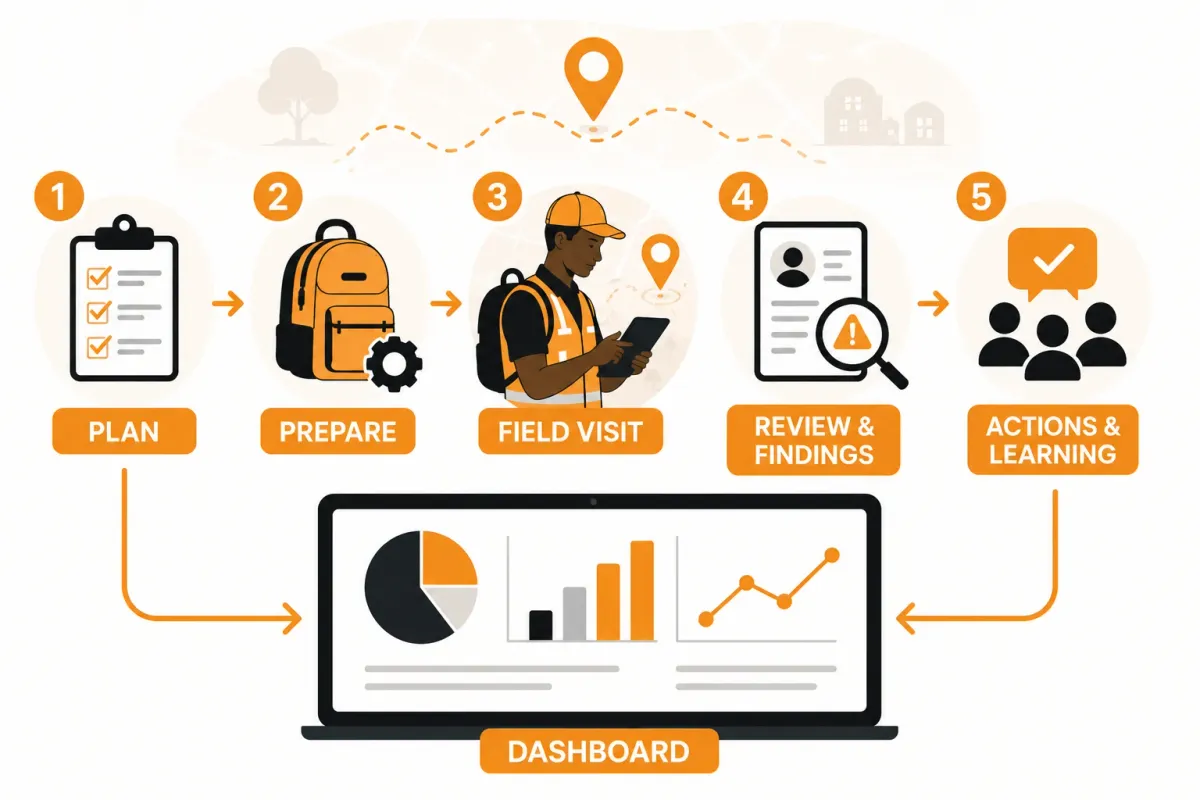
- Good field visit management starts with planning and ends with learning.
- Scheduling, review, findings and corrective actions are just as important as data collection.
- Software should support the entire field operations lifecycle.
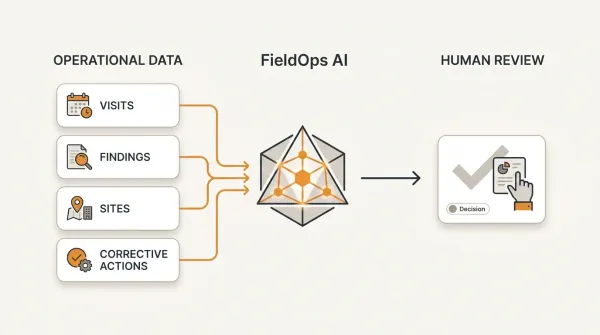
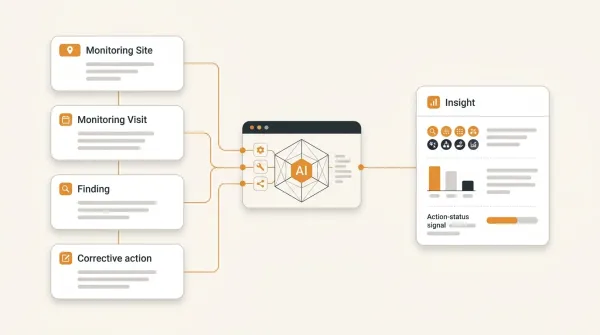
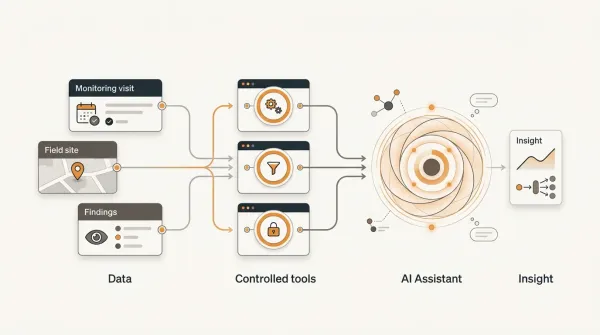
- Operational Intelligence connects every stage into one accountable workflow.
Search for "field visit management software" and you'll find plenty of products promising faster inspections, better forms or improved reporting.
Those capabilities matter.
But they only address one part of the challenge.
Ask an experienced programme manager what makes a successful field visit and you'll rarely hear them talk about form builders first.
Instead, they'll mention questions like:
- Were the right sites selected?
- Did the right people conduct the visit?
- Were previous findings followed up?
- Was the evidence reviewed on time?
- Did corrective actions actually happen?
Those questions reveal something important.
A field visit is not a single event.
It's a process.
Collecting information is one milestone in a field visit. Managing what happens before and after collection is where operational performance is won or lost.
Why Field Visits Are More Than Data Collection
A field visit starts with a purpose.
Perhaps a monitoring officer needs to verify project progress.
A government inspector needs to assess compliance.
An agriculture extension officer needs to visit farmer groups.
Or a donor-funded programme needs to validate reported results.
In every case, collecting evidence is only one stage of the journey.
A well-managed field visit typically includes:
| Stage | Purpose |
|---|---|
| Planning | Decide what should be visited and why |
| Preparation | Review previous visits, findings and objectives |
| Execution | Collect evidence in the field |
| Review | Verify quality and completeness |
| Findings | Record issues requiring attention |
| Corrective Actions | Assign responsibility and monitor progress |
| Reporting | Inform management decisions |
| Learning | Improve future visits and programme delivery |
When organisations treat these stages as separate activities managed in different tools, accountability becomes difficult.
When they manage them as one connected workflow, operational visibility improves dramatically.
The Hidden Cost of Poorly Managed Field Visits
Most organisations don't realise they have a field visit management problem until programmes become larger.
At first, the warning signs seem unrelated.
A visit is postponed because transport wasn't arranged.
A supervisor forgets to review a submission.
The same site is visited twice while another is missed entirely.
A finding is documented, but nobody follows up.
Over time, these small operational failures begin to affect programme performance.
They consume staff time, delay reporting and reduce confidence in the information used for decision-making.
Common symptoms include:
- Missed or duplicated field visits
- Inconsistent monitoring approaches between teams
- Delayed approvals
- Unresolved findings
- Corrective actions that are never verified
- Multiple spreadsheets tracking the same activities
None of these problems are caused by poor data collection.
They are caused by weak operational coordination.
The quality of a field visit is determined as much by what happens before and after the visit as by what happens during it.
What Modern Field Visit Management Software Should Do
Many software products focus on capturing information in the field.
A complete field visit management platform should support the entire operational lifecycle.
| Stage | Operational Capability |
|---|---|
| Planning | Schedule visits, assign teams and define objectives |
| Preparation | Review previous visits, findings and site history |
| Execution | Capture observations, GPS, photographs and responses |
| Review | Quality assurance, approvals and feedback |
| Findings | Record issues consistently |
| Corrective Actions | Assign owners, due dates and monitor progress |
| Reporting | Dashboards, KPIs and donor reporting |
| Learning | Identify trends and improve future operations |
When these capabilities are connected, organisations spend less time coordinating work and more time improving programme outcomes.
Data Collection Is Only Part of the Picture
A mobile form answers questions such as:
- What did we observe?
- Where was the visit conducted?
- Who completed the assessment?
Operational management answers different questions.
- Which visits still need to happen?
- Which submissions are awaiting review?
- Which recommendations remain outstanding?
- Which sites require another visit?
- Which programme is becoming high risk?
Those are the questions leaders ask every day.
They require operational workflows rather than additional survey questions.
A Practical Example
Imagine a national education programme monitoring hundreds of schools.
Field officers complete visits using a mobile data collection tool.
Without structured field visit management, programme managers still need to coordinate:
- visit schedules
- reviewer assignments
- outstanding findings
- corrective actions
- follow-up visits
- executive reporting
Many organisations manage those processes with email, messaging apps and spreadsheets.
As programmes grow, that approach becomes increasingly difficult to sustain.
Field visit management software brings those operational activities into one connected workflow, improving visibility and accountability without changing how evidence is collected.
Real-World Scenarios
Different organisations manage field visits for different reasons, but the operational challenges are remarkably similar.
Scenario 1: An NGO Monitoring Community Projects
Field officers visit project sites every week to verify activities, interview beneficiaries and document progress.
The organisation already collects quality data, but managers struggle to know which visits are overdue and whether recommendations have been implemented.
A good approach: Keep the existing data collection process and introduce structured visit scheduling, review workflows and corrective action tracking.
Scenario 2: A Government Inspection Team
Inspectors conduct compliance visits across multiple regions.
Leadership needs assurance that inspections are completed on time, findings are reviewed consistently and corrective actions are verified.
A good approach: Standardise field visit workflows across departments while maintaining a complete audit trail.
Scenario 3: A Humanitarian Programme
Rapid assessments are conducted immediately after an emergency.
As the response evolves, coordination becomes just as important as data collection.
Teams need visibility into repeat visits, unresolved issues and operational priorities.
A good approach: Combine rapid mobile data collection with operational management that supports follow-up and accountability.
Scenario 4: An Infrastructure Supervision Programme
Engineers inspect roads, water systems or public buildings throughout the project lifecycle.
Each visit generates observations, photographs and technical recommendations.
The real challenge is ensuring recommendations are completed before the next inspection.
A good approach: Manage findings and corrective actions as part of the same workflow rather than in separate spreadsheets.
Common Mistakes When Choosing Field Visit Management Software
Avoid selecting software based solely on its ability to collect data.
Instead, ask operational questions.
| Instead of asking... | Ask this instead... |
|---|---|
| Can it build forms? | Can it manage the entire visit lifecycle? |
| Does it capture GPS? | Can it schedule, review and track visits? |
| Can it export to Excel? | Can it manage findings and corrective actions? |
| Does it support photos? | Can leadership monitor operational performance across programmes? |
The best platform is the one that reduces operational friction—not simply the one with the longest feature list.
Good field visit management software helps organisations coordinate people, processes and evidence—not just collect information.
Our Recommendation
Choose a mobile data collection platform if your immediate priority is replacing paper forms and capturing reliable information in the field.
Choose a field visit management platform if your organisation already collects data but struggles with planning, scheduling, approvals, findings, corrective actions and operational reporting.
Choose both together if you want to preserve your existing data collection process while strengthening operational oversight across multiple programmes.
Many mature organisations successfully combine specialised data collection tools with an Operational Intelligence platform rather than replacing systems that already work well.
Final Thoughts
Field visits should create more than completed forms.
They should create accountability.
They should identify risks early.
They should drive corrective action.
They should provide leaders with timely operational insight.
The organisations that achieve those outcomes are rarely the ones collecting the most data.
They are the ones managing the complete field operations lifecycle with consistency and discipline.
That is the difference between monitoring activity and Operational Intelligence.
Move beyond data collection
FieldOps helps NGOs manage field visits, monitoring templates, findings, corrective actions, dashboards and donor reporting in one operational intelligence platform.
Learn more about FieldOps