From Findings to Action: Why Most Monitoring Programmes Fail to Close the Loop
Monitoring creates value only when findings lead to corrective action. Learn how development programmes can track findings, assign ownership, verify completion and close the loop through Operational Intelligence.

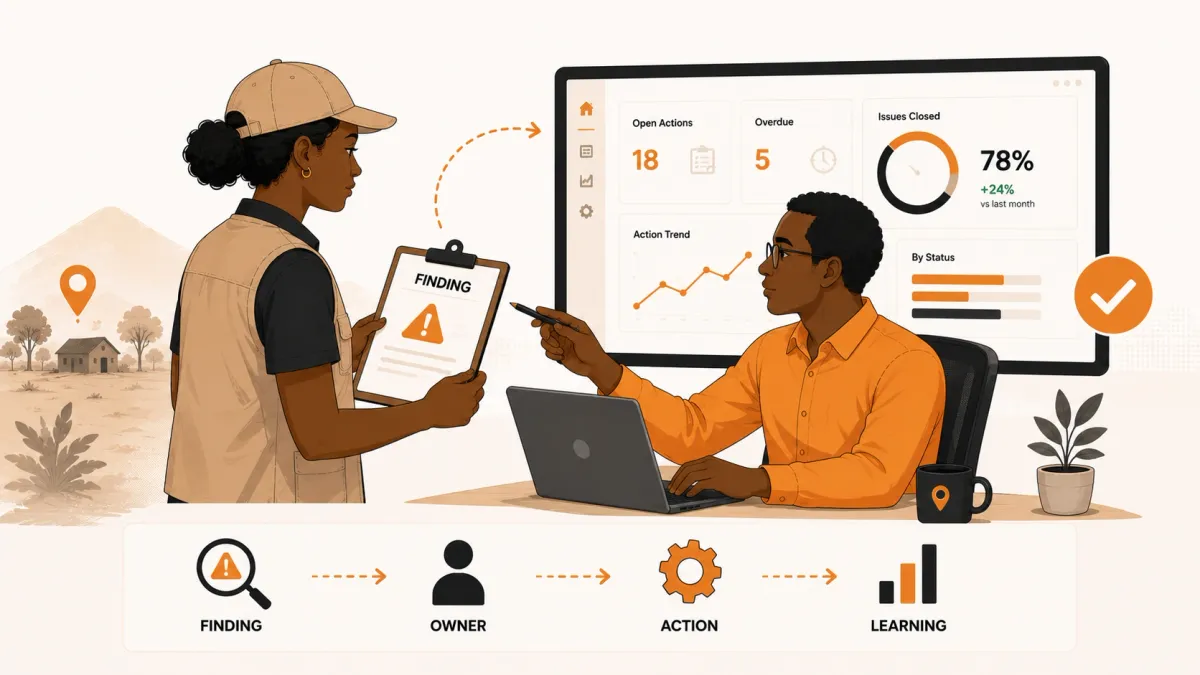
The purpose of monitoring is not to produce reports. It is to improve programmes. Every finding that remains unresolved represents a missed opportunity to strengthen delivery, reduce risk and create better outcomes for the communities an organisation serves.
Key Takeaways
- Monitoring only creates value when findings lead to action.
- Not every observation should become a finding.
- Every finding should have an owner, a deadline and a verification process.
- Corrective action tracking is essential for accountability.
- Operational Intelligence closes the loop between evidence and improvement.
Most development programmes are good at identifying problems.
Field teams conduct visits.
Evidence is collected.
Reports are written.
Recommendations are made.
And then... nothing happens.
The report is emailed to stakeholders.
A meeting is held.
Everyone agrees improvements are needed.
The next monitoring visit arrives, only to discover that the same issues still exist.
This pattern is surprisingly common.
It isn't caused by poor monitoring.
It's caused by weak follow-through.
A finding has no value until someone takes responsibility for resolving it.
Why Monitoring Doesn't End With a Report
Many organisations treat reports as the final output of a monitoring visit.
In reality, a report should be the beginning of an improvement process.
Think about a routine visit to a health facility.
The monitoring team discovers expired medicines, incomplete patient records and broken cold-chain equipment.
Documenting those issues is important.
But documenting them alone does not improve healthcare.
Improvement only begins when someone:
- accepts responsibility
- understands what needs to change
- has a deadline
- implements the corrective action
- provides evidence that the issue has been resolved
That is the difference between monitoring activity and operational improvement.
What Is a Finding?
Not every observation deserves to become a formal finding.
A finding is an issue that requires attention because it affects programme performance, compliance, quality or risk.
| Observation | Finding? | Why |
|---|---|---|
| A beneficiary arrived late | No | No operational risk on its own |
| Water pump is not functioning | Yes | Service delivery is affected |
| Required attendance registers are missing | Yes | Compliance and reporting are affected |
| Classroom walls need repainting | Maybe | Depends on programme objectives and risk |
Clear criteria help teams focus on issues that genuinely require follow-up rather than creating unnecessary administrative work.
Turning Findings Into Corrective Actions
A finding should always answer one question:
What needs to change?
A corrective action answers the next question:
Who will make that change, by when, and how will success be verified?
Without that second step, findings become little more than historical records.
| Finding | Corrective Action |
|---|---|
| Beneficiary registers are incomplete | Update registers and train staff on record-keeping |
| Water point is not functioning | Assign maintenance team and repair within 14 days |
| Required safety equipment is missing | Procure equipment and confirm delivery with evidence |
| Procurement approvals are delayed | Escalate to procurement manager and review approval workflow |
Every corrective action should include:
- A clearly assigned owner
- A realistic due date
- Expected evidence of completion
- A verification step
- A final closure decision
Accountability begins when ownership is clear.
Why Corrective Actions Fail
Most unresolved findings do not remain open because people are unwilling to act.
They remain open because the process around them is weak.
Common causes include:
- No individual owner
- No deadline
- No reminder mechanism
- No follow-up visit
- No evidence requested
- No executive visibility
When actions are managed through email threads or disconnected spreadsheets, it becomes difficult to know what has been completed, what is overdue and what requires escalation.
Closing the Loop
High-performing organisations treat every finding as part of a structured improvement cycle.
Field Visit
      ↓
Observation
      ↓
Finding
      ↓
Assign Owner
      ↓
Corrective Action
      ↓
Evidence Submitted
      ↓
Verification
      ↓
Closed
      ↓
Lessons Learned
This process transforms monitoring from an inspection exercise into a continuous improvement system.
Real-World Examples
Education
A monitoring visit identifies missing attendance registers.
Rather than simply recording the issue, the school administrator is assigned responsibility, given a completion date and asked to upload evidence before the next visit.
Health
Inspectors discover expired medicines.
The finding is assigned to the facility manager, replacement stock is ordered and a supervisor verifies completion during a follow-up visit.
Agriculture
Extension officers identify irrigation failures affecting demonstration plots.
Corrective actions are assigned to the project engineer and monitored until repairs are verified.
Government Inspection
A county inspection reveals non-compliance with safety standards.
The responsible department receives formal corrective actions, deadlines and escalation procedures for overdue items.
Across every sector, the workflow is the same:
Identify → Assign → Act → Verify → Learn.
Common Mistakes That Keep Findings Open
Even organisations with mature monitoring processes can struggle to close findings consistently.
The problem is rarely identifying issues.
The problem is managing what happens afterwards.
| Common Mistake | Better Practice |
|---|---|
| Recording findings without assigning an owner | Assign one accountable person for every corrective action |
| Setting unrealistic deadlines | Agree on practical due dates based on risk and effort |
| Tracking actions in multiple spreadsheets | Use one shared workflow with clear status tracking |
| Closing actions without verification | Require evidence before marking an action complete |
| Reporting only completed visits | Report both programme performance and outstanding actions |
When these practices become routine, monitoring shifts from measuring activity to improving performance.
A closed finding should mean the problem has been resolved—not simply that the report has been filed.
Choosing a Findings Management Approach
Different organisations require different levels of sophistication.
If your team manages a small number of findings each month, a simple tracker may be enough.
As programmes expand, however, consider whether your process can answer questions such as:
- Which findings are overdue?
- Which programmes have the highest number of unresolved issues?
- Which corrective actions are waiting for verification?
- Which sites repeatedly generate the same findings?
- Which risks require management attention today?
If those answers take hours to compile, the process has probably outgrown manual tracking.
Our Recommendation
Choose a simple tracker if:
- findings are infrequent
- a small team manages follow-up
- reporting requirements are limited
Choose a structured findings management workflow if:
- multiple programmes generate findings
- different people own corrective actions
- verification is required
- leadership needs operational visibility
- accountability matters across the organisation
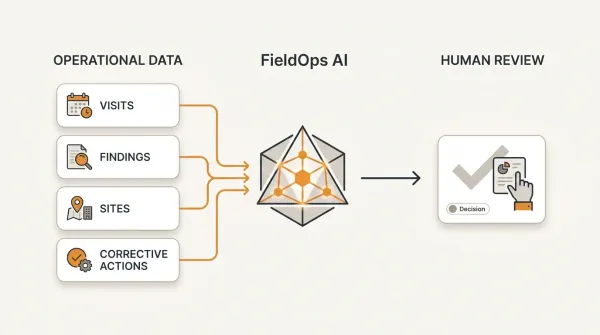
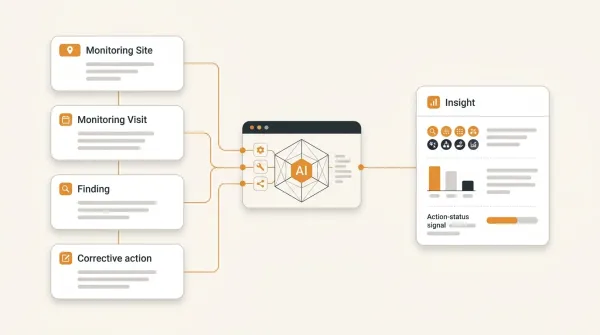
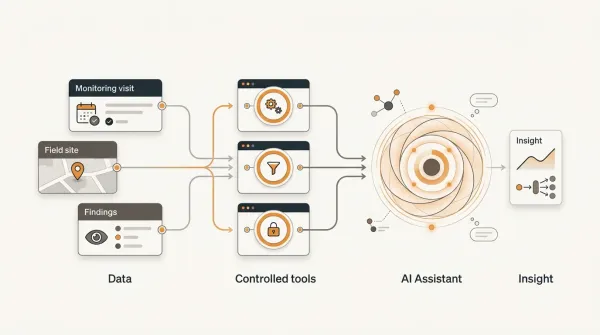
Many organisations continue using their preferred data collection platform while introducing an Operational Intelligence platform to manage findings, corrective actions, dashboards and organisational reporting.
Final Thoughts
Successful monitoring programmes are not defined by the number of reports they produce.
They are defined by the number of problems they solve.
Collecting evidence is essential.
Writing reports is important.
But lasting improvement only happens when findings lead to action, actions lead to verification and lessons are carried into future field visits.
That is how organisations close the loop.
That is how monitoring becomes Operational Intelligence.
Move beyond data collection
FieldOps helps NGOs manage field visits, monitoring templates, findings, corrective actions, dashboards and donor reporting in one operational intelligence platform.
Learn more about FieldOps