KoboToolbox Isn't the Problem - Your Operational Workflow Is
KoboToolbox is one of the best data collection platforms available. But as development programmes grow, they often need structured review workflows, findings, corrective actions and operational intelligence beyond data collection.

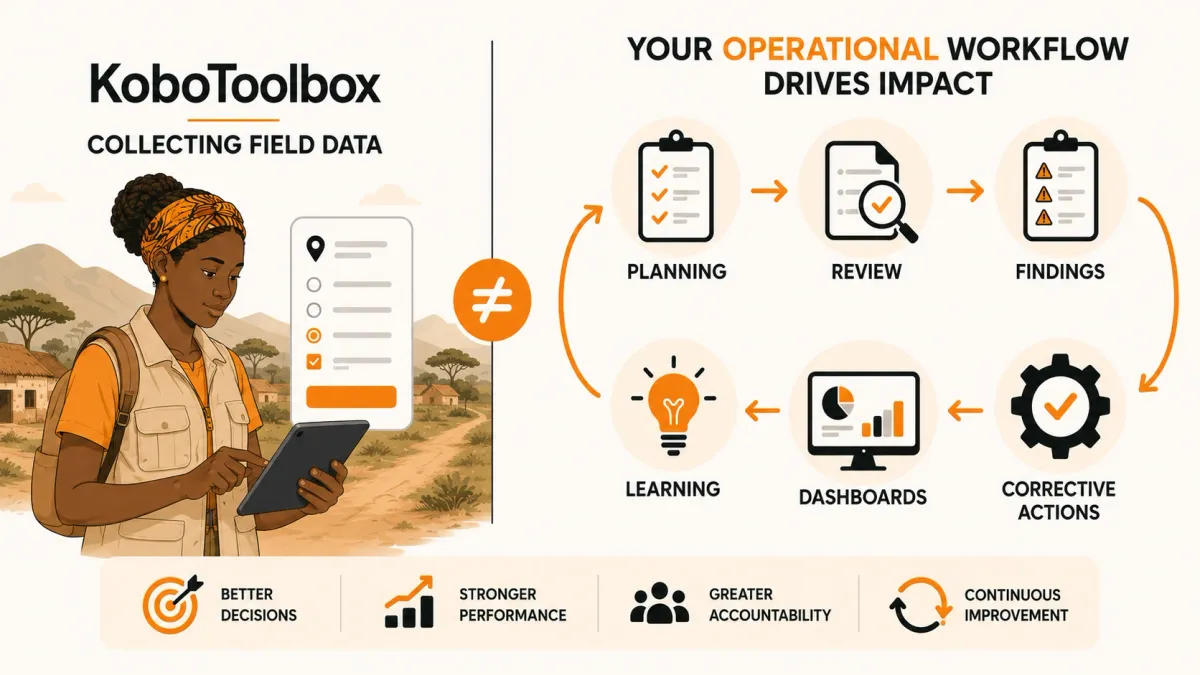
KoboToolbox has transformed data collection for thousands of organisations around the world. But as programmes grow, many teams discover that collecting data is only one part of managing field operations—and that's where new operational challenges begin.
Key Takeaways
- KoboToolbox is one of the best open-source data collection platforms available.
- Many organisations outgrow data collection before they outgrow KoboToolbox.
- Operational challenges usually emerge after forms have been submitted.
- Spreadsheets and email often become the glue holding fragmented workflows together.
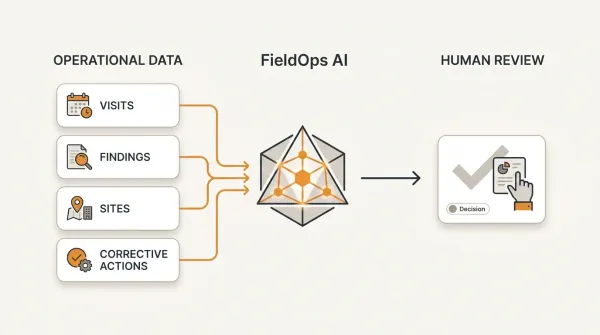
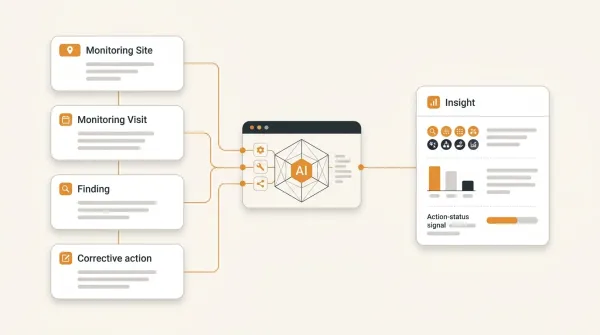
- Operational Intelligence connects planning, field visits, review, findings, corrective actions and reporting into one workflow.
For many NGOs, development programmes, humanitarian organisations and government agencies, KoboToolbox is the first serious step away from paper-based monitoring.
And for good reason.
It is reliable.
It works offline.
It scales well.
It has an active community.
It is trusted by organisations operating in some of the world's most challenging environments.
If your primary objective is to collect high-quality field data, KoboToolbox remains one of the strongest options available.
So why do so many organisations eventually start searching for phrases like:
- KoboToolbox alternatives
- KoboToolbox vs FieldOps
- NGO monitoring software
- MEL software
- Field visit management software
Usually, it isn't because KoboToolbox has failed.
It's because the organisation has changed.
As programmes expand, new questions begin to appear.
Not questions about data collection.
Questions about operations.
The challenge isn't collecting another survey. It's managing everything that happens before and after that survey is submitted.
Why KoboToolbox Became So Popular
Before discussing its limitations, it's worth acknowledging why KoboToolbox has become one of the most widely adopted data collection platforms in the development sector.
It solves a genuine problem.
Instead of relying on paper forms that must be manually entered into spreadsheets, organisations can collect structured information directly on mobile devices—even without an internet connection.
That alone has saved countless hours and improved data quality across humanitarian response, public health, agriculture, education and community development programmes.
KoboToolbox is particularly strong for:
| Strength | Why Organisations Choose It |
|---|---|
| Offline data collection | Reliable in remote locations |
| Survey design | Flexible form builder |
| Humanitarian response | Built with challenging environments in mind |
| Research and assessments | Excellent for structured questionnaires |
| Cost | Free and open source |
Those strengths explain why so many organisations continue to use it successfully today.
The important question isn't whether KoboToolbox is good.
It clearly is.
The better question is this:
What happens after the form is submitted?
The Questions That Start Appearing as Programmes Grow
When an organisation first adopts KoboToolbox, success is usually measured by one thing:
Can we collect reliable data from the field?
After a few months—or a few years—that question changes.
Programme managers begin asking questions that aren't about forms at all.
- Which field visits are still outstanding?
- Who hasn't submitted this month's monitoring visits?
- Which submissions are waiting for review?
- Which findings are still unresolved?
- Which corrective actions are overdue?
- Which project sites are becoming high risk?
- What has changed since the previous visit?
These are operational questions.
And this is the point where many organisations realise they haven't outgrown KoboToolbox.
They've outgrown data collection as the centre of their workflow.
The form may be complete, but the operational work has only just begun.
Where KoboToolbox Excels
It's important to separate what KoboToolbox was designed to do from what organisations later expect it to do.
KoboToolbox is an outstanding platform for collecting structured information.
It was never intended to become a complete operational management platform.
| Excellent For | Notes |
|---|---|
| Household surveys | Excellent |
| Baseline and endline studies | Excellent |
| Rapid assessments | Excellent |
| Offline mobile collection | Excellent |
| Humanitarian response | Excellent |
| Research questionnaires | Excellent |
If your organisation mainly conducts surveys and exports the results for analysis, KoboToolbox may continue to meet your needs for years.
There is no reason to replace software that is already solving the problem you actually have.
That distinction matters.
Where Operational Challenges Begin
As programmes become larger and more complex, additional processes emerge around every field visit.
Someone has to plan visits.
Someone has to assign field officers.
Someone has to review submissions.
Someone has to raise findings.
Someone has to assign corrective actions.
Someone has to verify that those actions were completed.
Those processes are usually managed somewhere else.
The result often looks like this.
| Operational Need | Typical Reality |
|---|---|
| Visit planning | Spreadsheet or shared calendar |
| Visit assignment | Email or WhatsApp |
| Submission review | Supervisor manually checks forms |
| Findings | Word document or spreadsheet |
| Corrective actions | Action tracker in Excel |
| Executive dashboards | Power BI connected to exported data |
None of these tools are inherently bad.
The challenge is that they rarely work as one connected workflow.
The Spreadsheet Problem
Almost every growing organisation experiences the same pattern.
Field data is collected successfully.
Then the operational work begins.
KoboToolbox
      ↓
Excel export
      ↓
Data cleaning
      ↓
Email review
      ↓
WhatsApp follow-up
      ↓
Power BI dashboard
      ↓
Action tracker spreadsheet
      ↓
Management meeting
Every step introduces another file, another process or another opportunity for information to be delayed or lost.
By the time leadership meets to review programme performance, different teams may already be working from different versions of the truth.
This isn't a KoboToolbox problem.
It's an operational workflow problem.
Data Collection Is Only One Stage
Think back to the complete field operations lifecycle.
Data collection represents one stage.
Planning happens before it.
Review follows immediately afterwards.
Findings lead to corrective actions.
Corrective actions influence reporting.
Reporting informs future planning.
Once organisations begin connecting those stages, they stop thinking in terms of isolated forms and start thinking in terms of operational workflows.
That's the transition from monitoring to Operational Intelligence.
When Should You Keep Using KoboToolbox?
This may sound surprising coming from a company that builds operational management software, but the answer is straightforward.
If your organisation's primary requirement is collecting surveys or monitoring data in the field, and your existing process works well, there is no compelling reason to replace KoboToolbox.
It remains one of the strongest open-source platforms available for digital data collection.
You should probably continue using KoboToolbox if:
- Your programmes are relatively small.
- Field data collection is your main operational requirement.
- Review and approvals are simple.
- Findings are managed informally.
- Corrective actions are handled within small teams.
- Reporting requirements are straightforward.
Technology should solve real problems.
Replacing software before those problems exist rarely creates value.
The goal isn't to replace KoboToolbox. The goal is to strengthen the operational workflow around it when your organisation is ready.
When Organisations Need Something More
Growth changes operational requirements.
A programme that once managed 50 field visits each month may now be coordinating hundreds across multiple regions, partners or countries.
At that point, leaders begin asking questions that a data collection platform was never designed to answer.
For example:
- Which supervisors still need to review submitted visits?
- Which findings remain unresolved after 90 days?
- Which corrective actions are overdue by programme?
- Which project sites have repeated compliance issues?
- Which indicators consistently perform below target?
- Which implementing partners require additional support?
These questions require operational processes that extend beyond form submission.
How Organisations Commonly Evolve
Most organisations don't replace KoboToolbox overnight.
Instead, they gradually add more systems.
A typical journey looks like this:
| Stage | Typical Tools |
|---|---|
| Digital data collection | KoboToolbox or ODK Central |
| Reporting | Excel and Power BI |
| Follow-up | Email, WhatsApp and spreadsheets |
| Operational management | Custom workflows or dedicated platforms |
| Executive oversight | Integrated dashboards and operational reporting |
Every additional tool solves an immediate need.
Over time, however, maintaining those connections becomes increasingly difficult.
Information becomes fragmented.
Different teams work from different systems.
Accountability becomes harder to maintain.
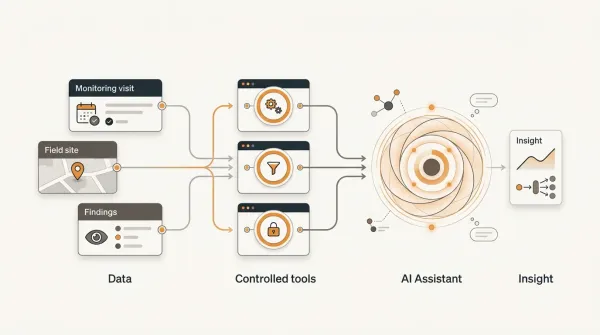
Operational Intelligence Complements Data Collection
Operational Intelligence doesn't replace good data collection.
It builds on it.
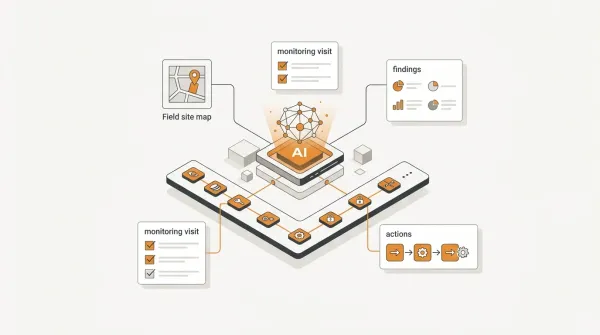
Imagine the lifecycle of a single monitoring visit.
A field officer completes a digital form.
A supervisor reviews the submission.
A finding is raised.
A corrective action is assigned.
Progress is tracked.
Evidence of completion is verified.
Management dashboards update automatically.
Lessons learned influence the next monitoring cycle.
The value comes from connecting every step—not simply capturing the first one.
That is why many organisations continue using tools such as KoboToolbox while strengthening the operational processes around them.
Final Thoughts
KoboToolbox has earned its place as one of the most important digital data collection platforms in the development sector.
For many organisations, it remains exactly the right tool.
But successful programmes eventually discover that collecting data is only part of managing field operations.
Planning.
Review.
Findings.
Corrective actions.
Operational reporting.
Continuous improvement.
Those activities determine whether monitoring information actually changes programme outcomes.
The question is no longer:
"Can we collect better data?"
It becomes:
"How do we manage everything that happens after the data is collected?"
That is where Operational Intelligence begins.
Move beyond data collection
FieldOps helps NGOs manage field visits, monitoring templates, findings, corrective actions, dashboards and donor reporting in one operational intelligence platform.
Learn more about FieldOps