Mobile Data Collection Software: Beyond Digital Forms and Offline Surveys
Mobile data collection improves field operations, but real impact comes from connecting field data with reviews, findings, corrective actions, dashboards and Operational Intelligence.

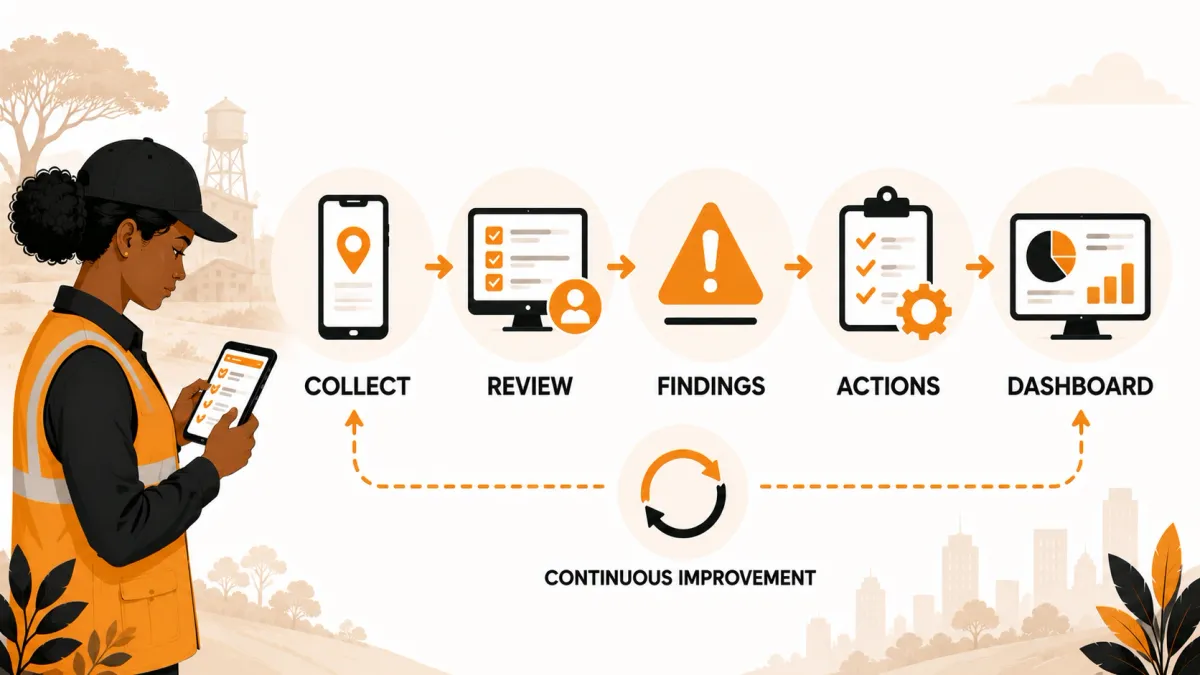
Mobile devices have transformed how organisations collect field data, but digital forms alone do not create better programmes. The real value comes from connecting data collection with reviews, findings, corrective actions, dashboards and decision-making. Modern Operational Intelligence begins where data collection ends.
Key Takeaways
- Mobile data collection improves speed, accuracy and accessibility, but it is only one part of effective programme management.
- Offline capability is essential for field teams working in remote locations.
- Collecting data without structured follow-up limits operational impact.
- Modern platforms connect mobile data collection with governance, reporting and continuous improvement.
- Operational Intelligence transforms field data into actionable operational decisions.
Mobile data collection has become the standard for NGOs, governments and development programmes operating in the field.
Paper questionnaires have largely been replaced by smartphones and tablets.
Field officers can collect information offline.
Photographs, GPS coordinates and timestamps can be captured automatically.
Completed forms can be synchronised as soon as connectivity becomes available.
These advances have dramatically improved the efficiency of field operations.
Yet many organisations continue to face familiar challenges.
Programme managers still spend days consolidating spreadsheets.
Donor reports still require manual verification.
Corrective actions are tracked separately from field visits.
Leadership dashboards depend on exported data rather than trusted operational records.
The problem is no longer how organisations collect field data.
The problem is what happens after the data has been collected.
Collecting field data answers what happened. Operational Intelligence helps organisations decide what should happen next.
Why Mobile Data Collection Isn't Enough
Replacing paper forms with mobile applications is an important step, but it should not be the final destination.
Many organisations invest in mobile data collection software expecting it to solve broader operational challenges.
Instead, they discover that although field teams collect better information, the organisation still struggles with fragmented workflows, inconsistent reporting and limited operational visibility.
Modern field programmes require far more than digital forms.
They require connected operational processes that ensure field observations lead to action, accountability and measurable improvement.
Consider what happens after a field officer submits a mobile form.
Someone must review the submission.
Issues may need clarification.
Findings should be identified.
Corrective actions may need to be assigned.
Progress should be monitored.
Management needs dashboards.
Leadership requires reliable reporting.
Without these connected processes, mobile data collection becomes an isolated activity rather than part of a continuous operational workflow.
The success of mobile data collection should not be measured by the number of forms submitted. It should be measured by the quality of operational decisions those forms enable.
The Evolution of Mobile Data Collection
Mobile data collection has evolved significantly over the past two decades.
Organisations first moved from paper questionnaires to digital forms to reduce transcription errors and improve reporting speed.
Offline mobile applications then enabled field teams to work in remote locations without reliable internet access.
Today, many platforms support GPS capture, photographs, digital signatures and automated synchronisation.
These capabilities have transformed how field information is collected.
However, the evolution of data collection has not always been matched by an evolution in operational management.
Many organisations still rely on disconnected processes after the form is submitted.
Data is exported into spreadsheets.
Reports are prepared manually.
Corrective actions are tracked separately.
Leadership waits for monthly summaries before identifying operational risks.
As a result, the organisation has modern data collection but traditional operational management.
Modern Operational Intelligence platforms address this gap by treating mobile data collection as the beginning of an operational workflow rather than the end of one.
The value of a mobile form is measured by the operational improvements it enables—not by the number of submissions it collects.
Real-World Mobile Data Collection Scenarios
Although mobile data collection is used across many sectors, the operational challenges are remarkably similar.
Health Programmes
Community health workers collect household visits, medicine availability and service delivery information using mobile devices.
The greatest value is realised when submitted data immediately supports supervisory reviews, identifies service gaps and generates corrective actions.
Agriculture and Extension Services
Extension officers record crop conditions, farmer visits and irrigation assessments throughout the growing season.
Connecting these observations with dashboards and historical trends enables programme managers to identify emerging risks before they become widespread.
Education Monitoring
School inspectors and education officers capture classroom observations, attendance records and infrastructure assessments.
Rather than producing isolated reports, the information should contribute to improvement plans, follow-up visits and executive dashboards.
Humanitarian Response
Rapid assessments are often conducted in difficult environments where connectivity is unreliable.
Offline mobile data collection allows teams to continue working, while synchronisation ensures decision-makers receive timely operational information as soon as communications are restored.
Government Inspections
Inspectors responsible for health, environmental, infrastructure or regulatory compliance increasingly rely on mobile devices instead of paper checklists.
Operational value increases significantly when inspection findings automatically feed review workflows, corrective actions and organisation-wide reporting.
Across every sector, mobile data collection delivers its greatest value when information continues flowing through the operational lifecycle instead of stopping at form submission.
Common Mobile Data Collection Mistakes
Many organisations successfully replace paper forms with mobile applications but continue to manage the rest of the operational process manually.
The result is faster data collection without better operational outcomes.
The most common mistakes include:
| Mistake | Better Practice |
|---|---|
| Measuring success by the number of forms submitted | Measure the operational improvements created from field data |
| Treating mobile data collection as the final step | Make data collection the beginning of a governed workflow |
| Exporting data into spreadsheets for reporting | Maintain one trusted operational data model |
| Tracking findings outside the data collection platform | Connect findings directly to field records |
| Managing corrective actions through email | Assign owners, deadlines and verification workflows |
| Building dashboards from manual exports | Drive dashboards from trusted operational records |
| Using different KPI definitions across programmes | Govern indicators centrally |
Mobile data collection should reduce operational uncertainty—not create more information to manage.
How Modern Operational Intelligence Platforms Solve This
Modern Operational Intelligence platforms recognise that collecting field information is only one part of successful programme delivery.
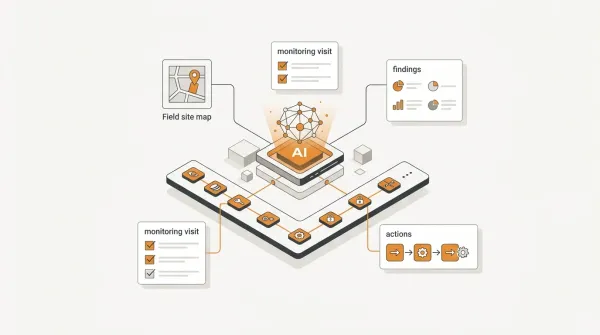
They connect mobile data collection with operational workflows so that information continues flowing through review, governance, reporting and continuous improvement.
Principle 1: Data Collection Starts the Workflow
Submitting a mobile form should trigger the next operational step rather than conclude the process.
Reviews, approvals and follow-up activities should happen within the same operational environment.
How FieldOps Applies This Principle
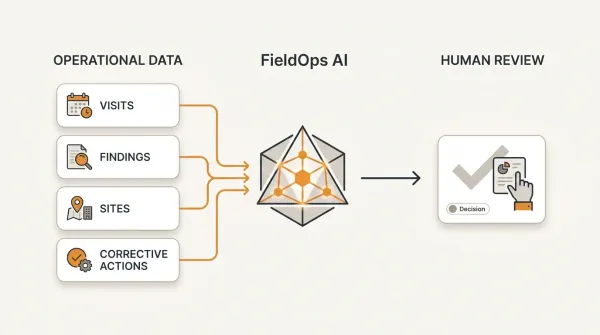
FieldOps treats every submitted field record as the beginning of an operational lifecycle. Monitoring visits, inspections and assessments move through structured review and approval workflows before becoming trusted operational records.
Principle 2: Field Data Should Become Actionable
Collecting observations without resolving issues creates little organisational value.
Important findings should become accountable corrective actions with clear ownership and measurable progress.
How FieldOps Applies This Principle
FieldOps allows findings identified during field visits or inspections to become corrective actions with priorities, owners, deadlines, progress updates and verification before closure.
Principle 3: One Trusted Operational Model
Many organisations collect information using multiple tools including KoboToolbox, ODK Central and structured Excel templates.
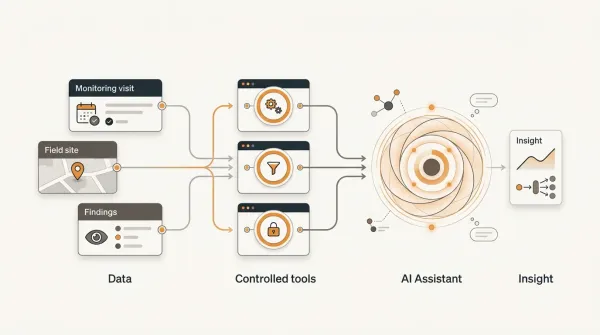
Operational Intelligence platforms connect these sources into one governed operational model instead of creating disconnected reporting silos.
How FieldOps Applies This Principle
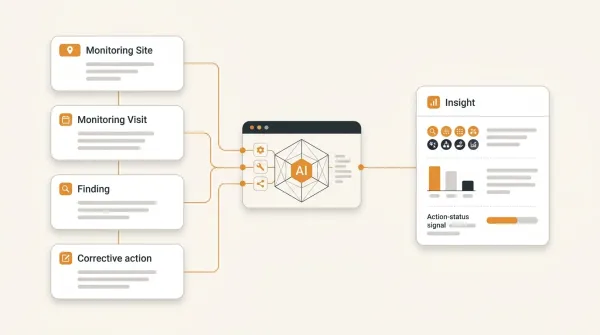
FieldOps complements existing collection tools by integrating operational information into a unified model that supports dashboards, KPI governance, reporting and enterprise analytics from a single trusted source.
Principle 4: Operational Reporting Must Scale
As programmes expand, reporting requirements increase dramatically.
Leadership should be able to analyse millions of operational records without affecting the performance experienced by field teams.
How FieldOps Applies This Principle
FieldOps separates operational transactions from analytical workloads through analytics-ready datasets and a secure BI API, enabling Microsoft Power BI, Tableau and other BI platforms to analyse large operational datasets while field teams continue working without interruption.
Modern mobile data collection is not defined by better forms. It is defined by better operational decisions.
Mobile Data Collection Software Evaluation Checklist
Choosing mobile data collection software is about far more than replacing paper forms.
The right platform should strengthen the entire operational lifecycle, ensuring that field information leads to better decisions rather than simply generating more records.
Use the following questions when evaluating potential solutions.
Data Collection
Can the software:
- Work reliably offline?
- Capture GPS coordinates and timestamps?
- Support photographs, attachments and digital signatures?
- Standardise forms across programmes?
- Synchronise data securely when connectivity becomes available?
Operational Workflows
Does the platform support:
- Structured review and approval processes?
- Findings management?
- Corrective actions with owners and deadlines?
- Follow-up visits and verification?
- Complete audit trails?
Dashboards and Reporting
Can managers:
- Monitor field activities in real time?
- Analyse trends across programmes and reporting periods?
- Identify recurring operational issues?
- Produce executive dashboards without manually exporting spreadsheets?
- Connect operational data to business intelligence platforms?
Enterprise Readiness
As programmes grow, can the platform:
- Integrate with existing systems such as KoboToolbox, ODK Central and Excel?
- Govern KPI definitions consistently?
- Support Microsoft Power BI, Tableau and other BI platforms?
- Provide secure APIs for enterprise reporting?
- Scale to millions of operational records without affecting field performance?
If the answer to several of these questions is "No", the software may improve data collection without significantly improving programme management.
The best mobile data collection software does more than capture information. It helps organisations act on it.
Final Thoughts
Mobile data collection has fundamentally changed how organisations gather information from the field.
That transformation has improved speed, accuracy and accessibility.
However, collecting information is only the first step.
The real value emerges when field observations become trusted operational records, findings lead to corrective actions, dashboards provide continuous visibility and leadership can make informed decisions based on governed operational information.
Organisations that consistently improve programme performance do not simply collect more data.
They connect field activities, reviews, accountability, reporting and organisational learning into one continuous operational workflow.
As programmes become larger and more complex, this integrated approach becomes increasingly important.
Mobile devices may capture the evidence.
Operational Intelligence ensures that evidence drives action.
The purpose of mobile data collection is not to submit more forms.
The purpose is to make better operational decisions.
Move beyond data collection
FieldOps helps NGOs manage field visits, monitoring templates, findings, corrective actions, dashboards and donor reporting in one operational intelligence platform.
Learn more about FieldOps