ODK Central vs KoboToolbox: Which Platform Is Better for Development Programmes?
ODK Central and KoboToolbox are two of the most widely used open-source data collection platforms. This guide compares their strengths, ideal use cases and explains when organisations need to think beyond data collection.

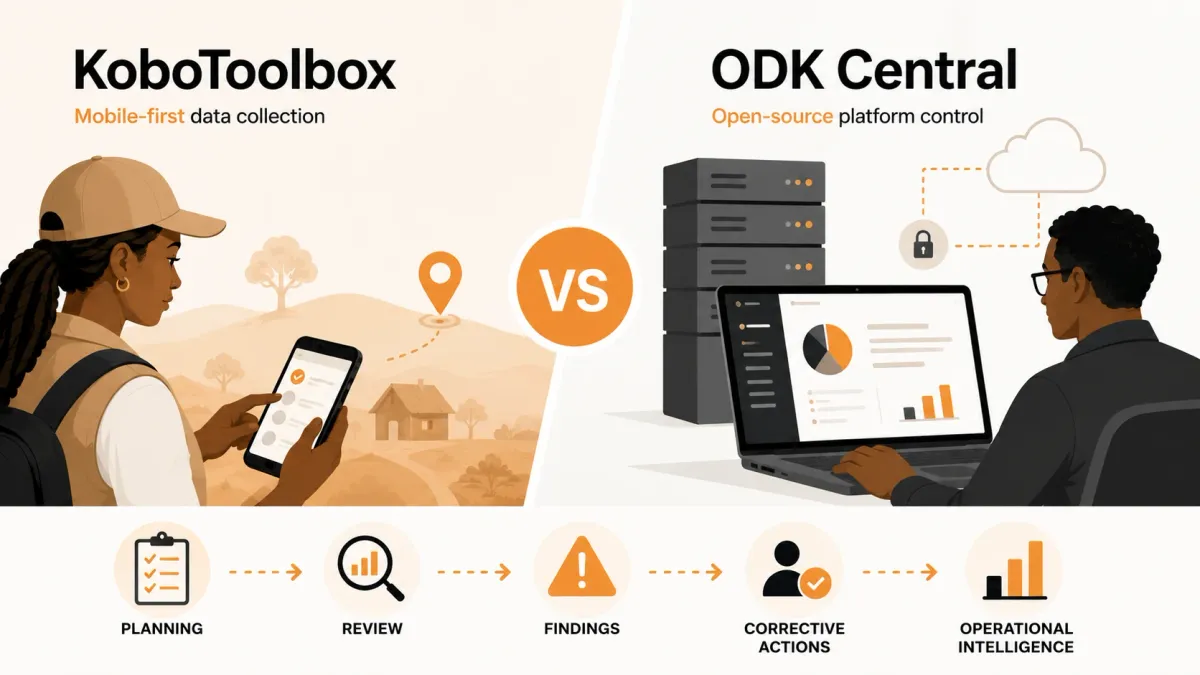
KoboToolbox and ODK Central are two of the most respected open-source data collection platforms in the development sector. Choosing between them isn't about deciding which one is "better"—it's about understanding which one best fits your organisation's technical capacity, operational model and long-term goals.
Key Takeaways
- KoboToolbox and ODK Central share many core capabilities.
- The biggest differences are operational rather than technical.
- Both platforms excel at mobile data collection.
- Neither platform was designed to manage the complete field operations lifecycle.
- Many organisations continue using KoboToolbox or ODK Central while introducing an Operational Intelligence platform as their programmes mature.
Search for "KoboToolbox vs ODK Central" and you'll find dozens of forum discussions, GitHub threads and feature comparisons.
Most of them focus on technical differences.
Which platform supports a particular question type?
Which one is easier to install?
Which one has a certain API?
Those are useful questions.
But they're not usually the questions programme managers, MEL teams or government agencies are trying to answer.
Their questions are often much more practical.
- Which platform can our team learn quickly?
- Which one is easier to maintain?
- Which one fits our operational model?
- Which one will still support us as our programmes grow?
Those are the questions we'll answer in this guide.
The right choice depends less on features and more on how your organisation works.
Why These Two Platforms Are So Often Compared
KoboToolbox and ODK Central share a common heritage.
Both support offline mobile data collection.
Both are trusted across humanitarian response, public health, agriculture, education and development programmes.
Both enable organisations to replace paper forms with structured digital data collection.
That similarity explains why they are frequently compared.
The important point is that they are solving the same category of problem:
Reliable field data collection.
Where KoboToolbox and ODK Central Are Similar
Despite the debates online, these two platforms have far more in common than many people realise.
Both were built to solve a fundamental challenge in development work:
Collect reliable information from the field, even when connectivity is limited.
Both platforms support capabilities that most organisations expect from modern mobile data collection.
| Shared Capability | KoboToolbox | ODK Central |
|---|---|---|
| Offline data collection | ✓ | ✓ |
| GPS capture | ✓ | ✓ |
| Photographs | ✓ | ✓ |
| Repeat groups | ✓ | ✓ |
| Skip logic | ✓ | ✓ |
| Mobile forms | ✓ | ✓ |
| Data export | ✓ | ✓ |
If your decision is based purely on whether a platform can collect field data, either option is capable of meeting that need.
The differences begin to appear in how organisations deploy, manage and scale those platforms.
For most organisations, the question isn't "Can it collect data?" It's "Can our team successfully operate and support it?"
Where They Begin to Differ
The biggest differences are less about features and more about operational fit.
KoboToolbox
KoboToolbox has earned a reputation for being approachable.
Many NGOs and development programmes can begin collecting data quickly without needing a dedicated technical team.
That ease of adoption is one reason it has become so widely used across humanitarian and development projects.
It is often a strong choice when programme teams want to focus on fieldwork rather than platform administration.
ODK Central
ODK Central provides greater flexibility for organisations that have stronger technical capacity.
Teams that already manage servers, integrations and custom deployments often appreciate the additional control it offers.
That flexibility can be valuable for large or highly specialised implementations, but it may also require more internal technical ownership than smaller organisations are prepared to support.
Neither approach is inherently better.
The right choice depends on your organisation—not on a feature checklist.
Operational Fit Matters More Than Features
Consider these questions before making a decision.
| Question | Why It Matters |
|---|---|
| Who will administer the platform? | Determines the level of technical support required. |
| How quickly do field teams need to be operational? | Influences onboarding and training. |
| Will multiple programmes share the same platform? | Affects governance and standardisation. |
| Do you expect significant growth? | Helps determine long-term scalability. |
| What happens after forms are submitted? | Highlights whether operational workflows need separate support. |
Choosing a platform that matches your operational reality is usually more important than choosing one with a slightly longer list of technical capabilities.
Real-World Deployment Scenarios
Looking at typical deployment scenarios is often more useful than comparing features.
Scenario 1: A Humanitarian NGO
A humanitarian organisation needs to deploy rapid needs assessments after flooding.
Speed matters.
Field teams have limited connectivity.
Technical resources are limited.
Our recommendation: KoboToolbox is often the quickest route to getting reliable mobile data collection into the hands of field teams.
Scenario 2: A University Research Project
Researchers are conducting a large longitudinal study that requires sophisticated form design, controlled deployments and close technical oversight.
Our recommendation: ODK Central is often a strong fit for organisations with dedicated technical teams and advanced deployment requirements.
Scenario 3: A Government Ministry
A ministry coordinates monitoring across multiple departments and regional offices.
Data collection is only one requirement.
Leadership also needs consistent review processes, audit trails, accountability and organisation-wide reporting.
Our recommendation: Continue using the data collection platform that best fits your technical environment, while introducing operational management processes for planning, approvals, findings and reporting.
Scenario 4: A Multi-Country Development Programme
An international programme operates across several countries.
Different implementing partners already use different collection tools.
Replacing every system would be disruptive.
Our recommendation: Standardise operational processes instead of forcing every partner onto the same data collection platform. Integrate where practical and focus on consistent review, findings, corrective actions and reporting.
The Conversation Most Comparisons Miss
Most comparisons end once the form has been submitted.
In reality, submission is where many operational challenges begin.
Programme managers still need to answer questions such as:
- Which visits are awaiting review?
- Which findings remain unresolved?
- Which corrective actions are overdue?
- Which locations require another visit?
- Which programmes present the greatest operational risk?
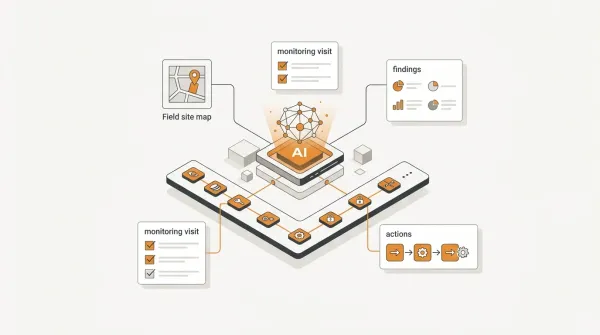
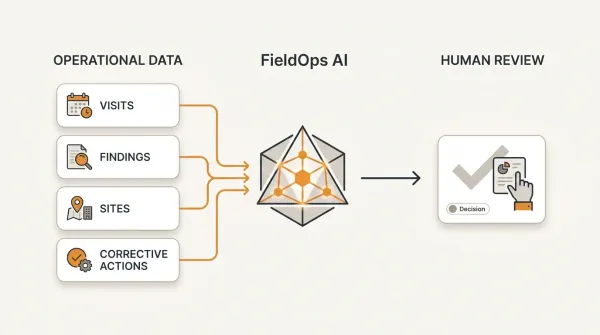
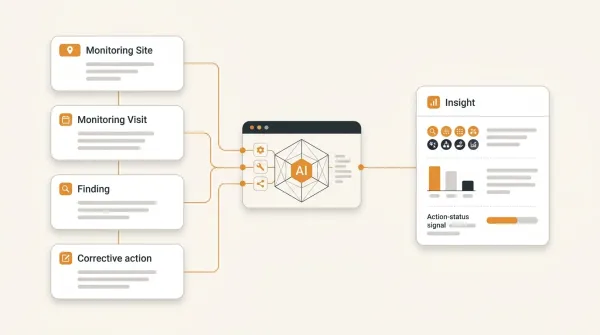
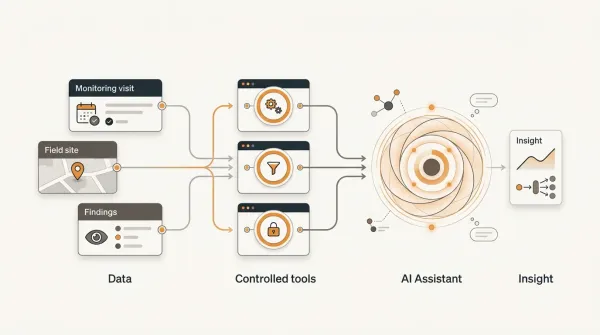
Neither KoboToolbox nor ODK Central was designed to manage the complete operational lifecycle.
That isn't a weakness.
It's simply a different category of software.
Data collection platforms collect evidence. Operational Intelligence platforms help organisations act on that evidence.
Our Recommendation
Choose KoboToolbox if:
- rapid deployment is your priority
- you want an approachable platform for field teams
- your primary challenge is collecting reliable data
Choose ODK Central if:
- your organisation has strong technical capacity
- you need greater deployment flexibility
- your team is comfortable managing technical infrastructure
Consider adding an Operational Intelligence platform such as FieldOps if:
- you already collect data successfully
- review workflows are becoming difficult
- findings are tracked in spreadsheets
- corrective actions lack accountability
- leadership needs organisation-wide operational visibility
These recommendations are complementary, not competitive.
Many organisations achieve the best results by combining specialised data collection with structured operational management.
Final Thoughts
KoboToolbox and ODK Central have transformed how organisations collect information from the field.
Both deserve their reputation.
Choosing between them should depend on your operational context, technical capacity and long-term goals—not on internet debates over feature lists.
As programmes mature, the conversation often shifts away from data collection itself.
The focus becomes improving coordination, accountability and decision-making across the entire field operations lifecycle.
That is where Operational Intelligence adds value.
Move beyond data collection
FieldOps helps NGOs manage field visits, monitoring templates, findings, corrective actions, dashboards and donor reporting in one operational intelligence platform.
Learn more about FieldOps