Offline Data Collection Software: Why Offline Capability Alone Is Not Enough
Offline data collection enables field teams to work anywhere, but real operational value comes from connecting synchronised data with reviews, corrective actions, dashboards and Operational Intelligence.

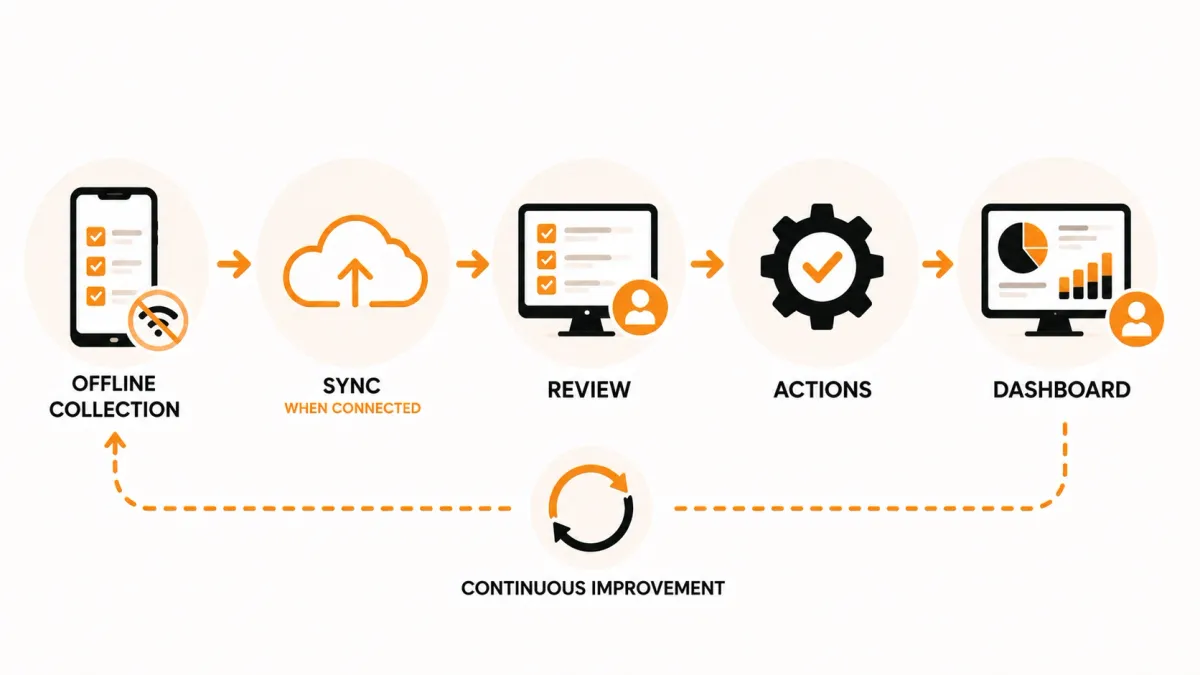
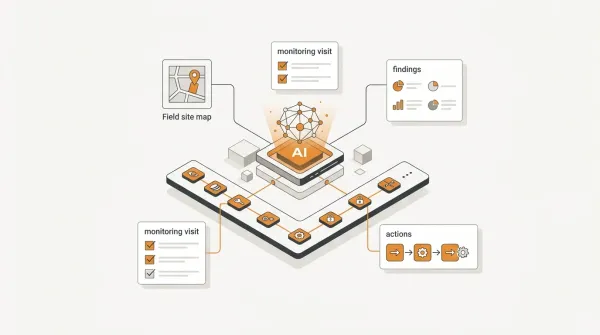
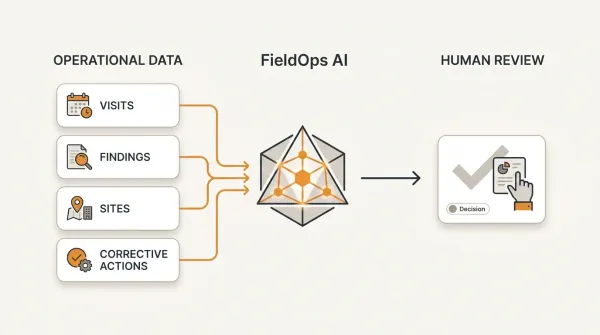
Offline data collection has transformed field work in remote and low-connectivity environments, but offline capability alone does not create better operational outcomes. The greatest value comes from connecting offline data collection with reviews, findings, corrective actions, dashboards and continuous decision-making. Operational Intelligence begins when synchronisation is complete—not when it starts.
Key Takeaways
- Offline capability enables reliable field work where internet connectivity is limited or unavailable.
- Collecting data offline is only one stage in the operational lifecycle.
- Effective platforms connect offline data collection with governance, accountability and reporting.
- Field data should drive findings, corrective actions and continuous operational improvement.
- Modern Operational Intelligence platforms transform offline records into trusted organisational knowledge.
For many NGOs, governments and development programmes, reliable internet access cannot be taken for granted.
Field teams work in remote villages.
Agricultural extension officers visit farms beyond mobile network coverage.
Health workers conduct household surveys in isolated communities.
Inspectors assess infrastructure in locations where connectivity is intermittent or unavailable.
In these environments, offline data collection is essential.
Without it, field operations would slow dramatically or stop altogether.
Modern offline data collection software allows teams to continue collecting information regardless of network availability.
Forms are completed locally.
GPS coordinates are recorded.
Photographs are captured.
Evidence is stored securely on the device until connectivity becomes available.
This capability has transformed field operations across the world.
However, many organisations still discover that operational challenges begin after the data has been synchronised.
Reports remain manual.
Corrective actions are managed in spreadsheets.
Leadership waits for periodic updates before recognising operational risks.
Offline capability solved the connectivity problem.
It did not solve the operational management problem.
The value of offline data collection is not measured by how many forms are synchronised. It is measured by how effectively organisations use that information to improve operations.
Why Offline Capability Matters
Offline capability is no longer a luxury feature.
For organisations operating across rural, remote or disaster-affected environments, it is a core operational requirement.
Field teams should never have to postpone essential activities simply because mobile coverage is unavailable.
Reliable offline software enables organisations to:
- continue collecting information in remote locations
- reduce delays caused by unreliable connectivity
- improve data quality by eliminating paper transcription
- capture GPS locations, photographs and supporting evidence
- synchronise information securely once connectivity returns
These capabilities increase efficiency and reduce operational disruption.
They also improve confidence that critical field information will not be lost simply because an internet connection is unavailable.
Yet offline capability alone cannot ensure better programme outcomes.
Once synchronisation is complete, organisations still need structured operational workflows that transform field observations into decisions, accountability and measurable improvement.
Offline capability keeps field operations moving. Operational Intelligence ensures they move in the right direction.
Why Offline Capability Alone Isn't Enough
Many organisations assume that once field teams can collect data offline, their operational challenges have been solved.
In reality, offline capability addresses only one part of the field operations lifecycle.
It ensures that information can be captured regardless of internet connectivity.
It does not ensure that information is reviewed, acted upon or used to improve programme performance.
After synchronisation, organisations still need to answer critical operational questions.
- Which submissions require review?
- Which observations represent significant findings?
- Who is responsible for resolving identified issues?
- Which corrective actions are overdue?
- Which locations consistently experience the same operational problems?
- What trends require management attention?
Without structured workflows, offline data simply accumulates in another database.
Operational Intelligence platforms ensure that every synchronised record becomes part of a governed operational process rather than an isolated submission.
Offline capability solves data capture. Operational Intelligence solves operational decision-making.
Real-World Offline Data Collection Scenarios
Offline data collection is essential across many sectors where connectivity cannot be guaranteed.
Humanitarian Response
Emergency response teams often work in disaster-affected areas where communications infrastructure has been damaged.
Offline data collection enables rapid needs assessments without waiting for internet access.
Once synchronised, assessment data should immediately support resource allocation, response planning and operational dashboards.
Rural Health Programmes
Community health workers conduct household visits across remote communities.
Patient information, medicine availability and service delivery observations are collected offline throughout the day.
When synchronised, the information should support supervisory reviews, identify service gaps and trigger follow-up actions where required.
Agricultural Extension
Extension officers visit farms throughout the growing season, often in areas with unreliable connectivity.
Offline applications allow observations to be recorded immediately instead of relying on paper notes.
Operational value increases when these observations contribute to trend analysis, advisory planning and programme performance dashboards.
Infrastructure Inspections
Inspectors assessing roads, bridges, water systems or public facilities frequently operate outside mobile coverage.
Offline inspection forms ensure evidence is captured consistently, while synchronisation allows findings to enter review workflows, corrective action tracking and executive reporting.
Environmental Monitoring
Environmental officers monitor protected areas, forests, water sources and industrial sites where internet access may be unavailable.
Offline capability ensures continuous data collection, but long-term environmental management depends on connecting those records with historical analysis, compliance tracking and operational decision-making.
Across every sector, offline data collection creates the greatest value when synchronised information becomes part of a continuous operational workflow instead of ending at successful upload.
Common Offline Data Collection Mistakes
Offline capability is often treated as the final objective instead of one capability within a broader operational architecture.
As a result, organisations improve field data collection while continuing to struggle with governance, accountability and reporting.
The most common mistakes include:
| Mistake | Better Practice |
|---|---|
| Measuring success by synchronised forms | Measure operational improvements achieved |
| Treating synchronisation as the end of the process | Begin structured reviews after synchronisation |
| Exporting synchronised data into spreadsheets | Maintain one governed operational data model |
| Tracking issues outside the collection platform | Link findings directly to field records |
| Managing follow-up through email | Use corrective action workflows with owners and deadlines |
| Producing static reports | Monitor live operational dashboards |
| Using inconsistent indicators | Govern KPIs centrally across programmes |
Synchronising field data is an operational milestone—not the operational outcome.
How Modern Operational Intelligence Platforms Solve This
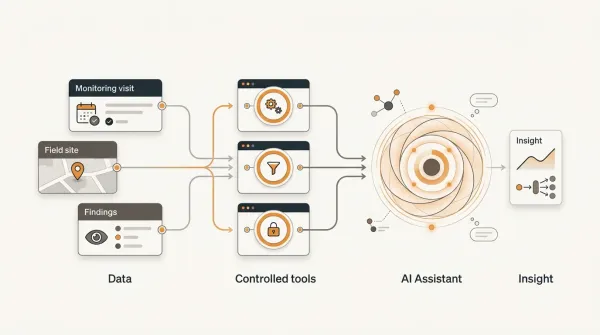
Modern Operational Intelligence platforms treat offline capability as one component of an end-to-end operational workflow.
Instead of stopping when devices reconnect, they continue guiding information through review, governance, corrective actions, reporting and organisational learning.
Principle 1: Synchronisation Starts Operational Management
When offline records are uploaded, they should immediately enter structured review and approval workflows.
This improves confidence in operational information before it is used for reporting or decision-making.
How FieldOps Applies This Principle
FieldOps incorporates synchronised field records into governed operational workflows, ensuring that reviews, approvals and audit history become part of every operational record.
Principle 2: Every Observation Should Drive Action
Field observations only create value when organisations respond to them.
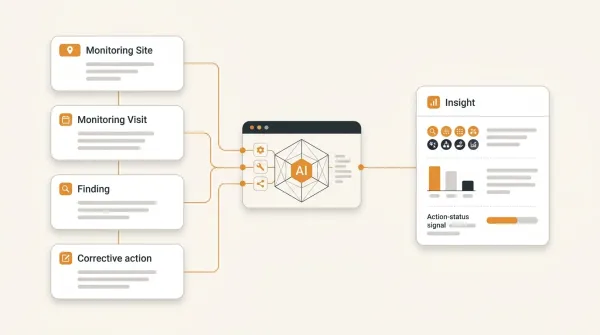
Important issues should become findings, and findings should become accountable corrective actions with measurable progress.
How FieldOps Applies This Principle
FieldOps converts monitoring visits, inspections and field observations into tracked corrective actions with ownership, priorities, deadlines and verification before closure.
Principle 3: One Trusted Operational Model
Many organisations collect offline information using multiple technologies.
Operational Intelligence platforms unify those records into one governed operational model that supports dashboards, reporting and analytics without duplication.
How FieldOps Applies This Principle
FieldOps complements KoboToolbox, ODK Central and Excel by integrating synchronised operational records into a single trusted model with governed KPIs and consistent reporting.
Principle 4: Enterprise Reporting Should Scale
Synchronised field information should support operational dashboards and executive analytics regardless of programme size.
Reporting workloads should never reduce the responsiveness experienced by field teams.
How FieldOps Applies This Principle
FieldOps provides analytics-ready datasets and a secure BI API that integrate with Microsoft Power BI, Tableau and other business intelligence platforms, allowing organisations to analyse millions of synchronised records without affecting day-to-day field operations.
Offline data collection reaches its full value when synchronised information becomes trusted Operational Intelligence rather than simply stored data.
Offline Data Collection Software Evaluation Checklist
Choosing offline data collection software is about more than ensuring field teams can work without an internet connection.
The right platform should strengthen the entire operational lifecycle, ensuring that information collected in remote locations becomes trusted operational knowledge that supports better decisions.
Use the following questions when evaluating potential solutions.
Offline Capability
Can the software:
- Operate reliably without internet connectivity?
- Automatically synchronise data when connectivity is restored?
- Protect locally stored information through encryption or secure storage?
- Prevent data loss during synchronisation?
- Continue functioning across different mobile devices and operating systems?
Field Data Collection
Can field teams:
- Capture structured forms and questionnaires?
- Record GPS coordinates automatically?
- Attach photographs and supporting documents?
- Capture digital signatures where required?
- Complete inspections and assessments entirely offline?
Operational Workflows
Does the platform support:
- Structured review and approval workflows?
- Findings management?
- Corrective actions with owners and deadlines?
- Follow-up visits and verification?
- Complete audit trails for operational accountability?
Dashboards and Reporting
Can managers:
- Monitor synchronised field activities in near real time?
- Analyse operational trends across programmes and reporting periods?
- Identify recurring issues that require management attention?
- Produce executive dashboards without manually exporting spreadsheets?
- Connect operational information to business intelligence platforms?
Enterprise Readiness
As programmes grow, can the platform:
- Integrate with existing systems such as KoboToolbox, ODK Central and Excel?
- Maintain one governed operational data model?
- Support Microsoft Power BI, Tableau and other business intelligence platforms?
- Provide secure APIs for enterprise reporting?
- Scale to millions of operational records without affecting field performance?
If the answer to several of these questions is "No", the software may successfully support offline data collection while leaving organisations to manage reviews, corrective actions and reporting through disconnected processes.
The best offline data collection software doesn't simply work without internet access. It helps organisations continue making informed operational decisions once connectivity returns.
Final Thoughts
Offline capability has transformed field operations for organisations working in remote and challenging environments.
It ensures that field teams can continue collecting reliable information regardless of network availability.
That alone is a significant operational achievement.
However, successful programmes are not defined by how much information they collect while offline.
They are defined by what they do after that information is synchronised.
Field observations should become reviewed operational records.
Reviews should identify meaningful findings.
Findings should generate corrective actions.
Corrective actions should improve programme performance.
Dashboards should provide continuous operational visibility.
Leadership should have the confidence to make decisions using trusted, governed information.
Offline capability keeps field operations moving.
Operational Intelligence ensures those operations continue improving.
The purpose of offline data collection is not simply to work without internet access.
The purpose is to ensure that every field observation contributes to better operational decisions, stronger accountability and continuous programme improvement.
Move beyond data collection
FieldOps helps NGOs manage field visits, monitoring templates, findings, corrective actions, dashboards and donor reporting in one operational intelligence platform.
Learn more about FieldOps