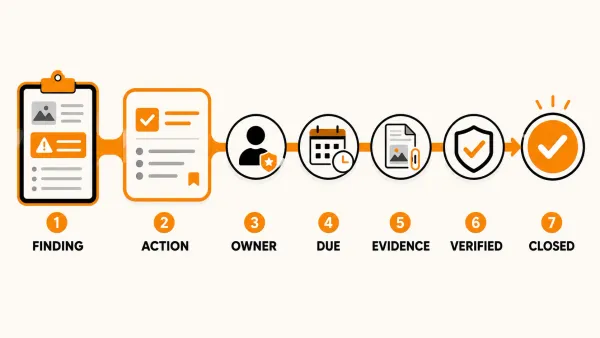
How to Track Corrective Actions From Field Monitoring Visits
Learn how to turn field monitoring findings into trackable corrective actions with clear ownership, deadlines, evidence, verification and closure.

Learn how to turn field monitoring findings into trackable corrective actions with clear ownership, deadlines, evidence, verification and closure.
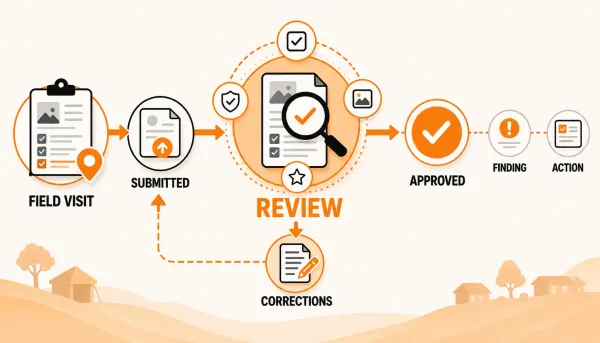
Learn how to build a reliable review and approval workflow for field monitoring visits, from submission and evidence checks to corrections, approval, findings, and corrective actions.
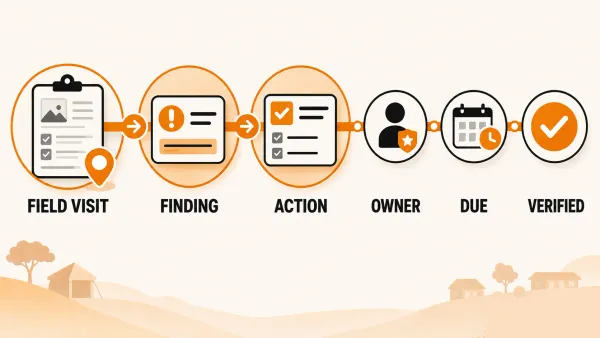
A field monitoring visit can identify important problems. But identifying a problem is only the beginning. The real operational challenge is making sure that every actionable finding leads to a clearly defined response and that the response remains connected to the original field observation. A useful monitoring chain is: Field
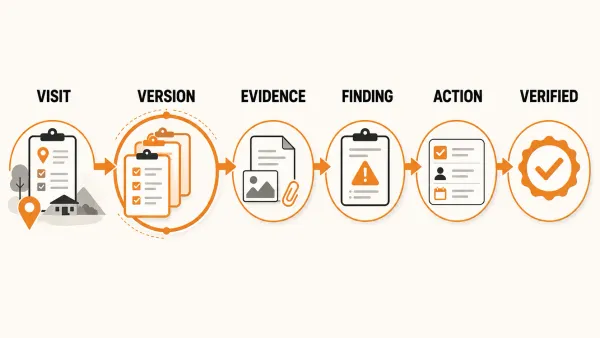
Learn how to make field monitoring visits auditable by preserving visit history, versions, evidence, findings, corrective actions and verification from the original field submission through closure.
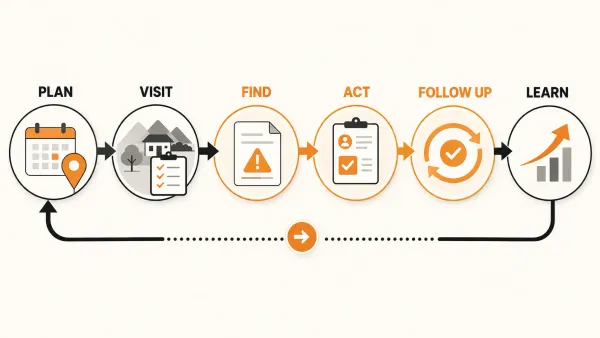
A practical guide to managing the complete field visit lifecycle for NGO and development programmes, from planning and site selection to monitoring, findings, corrective actions, review and follow-up.
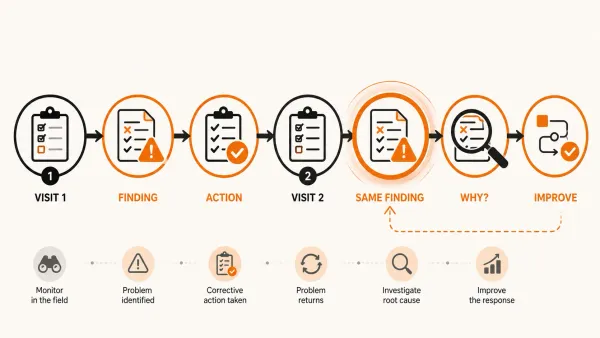
Learn how M&E teams can identify recurring findings, distinguish isolated issues from systemic problems, and use monitoring data to improve project implementation.
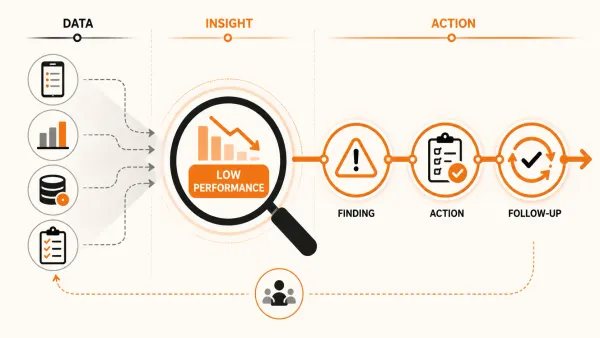
Collecting monitoring data is only the beginning. Learn how M&E teams can turn project data into actionable insights, decisions and follow-up actions.
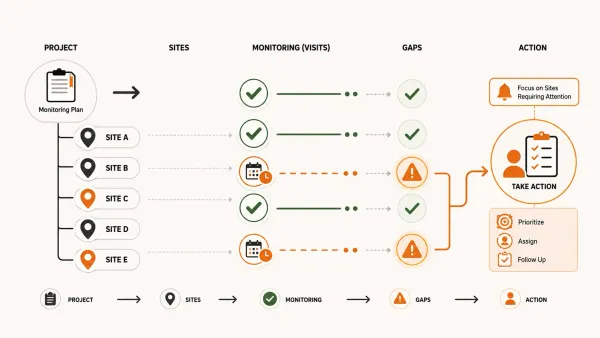
Learn how NGOs and M&E teams can track monitoring visits, identify overdue sites, measure monitoring coverage and maintain a complete history of field monitoring.
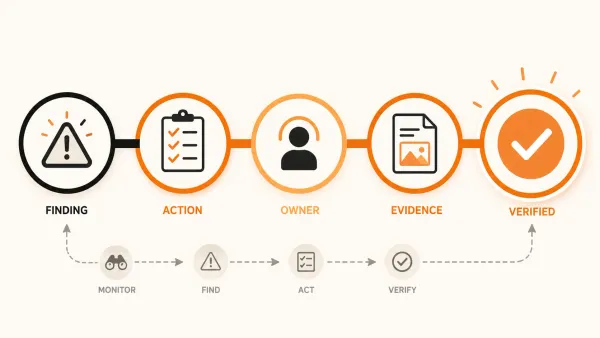
Learn how NGOs can track monitoring findings, assign corrective actions, monitor deadlines, document evidence and verify whether issues have actually been resolved.
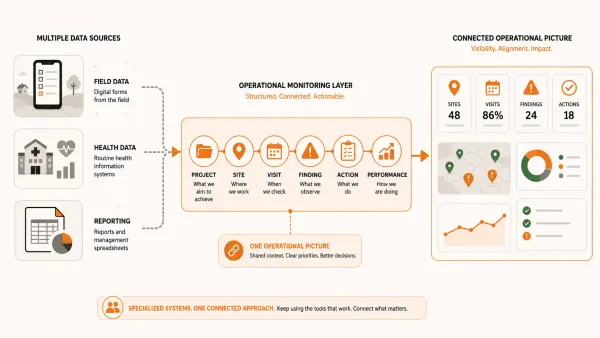
Learn how NGOs can connect field data from KoboToolbox and ODK with DHIS2 and project monitoring workflows without replacing the systems they already use.
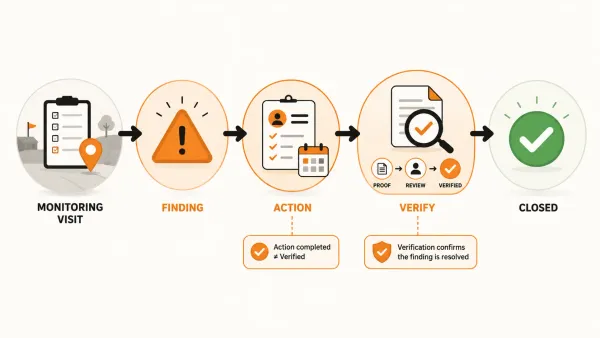
Learn why M&E findings disappear into reports and spreadsheets, how to build a proper corrective-action workflow, and how NGOs can track findings from identification to verified resolution.
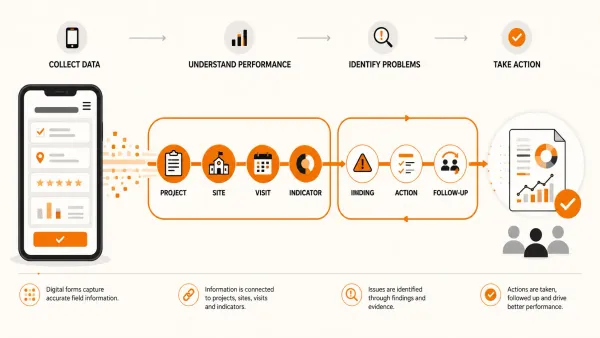
ODK is powerful for digital field data collection, but collecting submissions is only one part of monitoring and evaluation. Learn how NGOs can connect ODK data to projects, sites, indicators, findings, actions and reporting.